




A maintenance buyer who orders a wire wheel brush and a nylon abrasive brush as if they were the same tool will pay for the mistake within the first hour of use. The two brush families solve different problems, run at different different speeds, require different different operator PPE, and produce different surface profiles — and the choice between them for a given application is a technical decision, not a procurement preference. This guide walks through the six application differences that determine the right brush, in the order a buyer is most likely to encounter them on the shop floor.
Why Wire vs Nylon Is Not a Style Choice
An industrial buyer who treats “wire wheel” and “nylon abrasive brush” as interchangeable is paying for the wrong tool twice — once for the brush, and again for the rework when the workpiece fails inspection. The two brush families address two different surface problems, and the choice between them for a given application is a technical decision driven by the substrate material, the contaminant, the contamination risk, the surface finish target and the operator PPE requirement — in roughly that order of weight.
The FEPA abrasive standards distinguish bonded abrasives (grinding wheels, cutting discs) from coated abrasives (sandpaper, abrasive belts) and from non-woven abrasive products (nylon abrasive brushes and flap wheels). Steel wire brushes are not even in the FEPA taxonomy — they are governed by the separate OSHA 29 CFR 1910 machinery and power-tool standards and by the manufacturer’s printed maximum safe operating speed (MSOS). The regulatory split matters because the safety envelope is different for the two brush families, and a procurement specification that confuses them will fail inspection.
Difference #1 — Removing Heavy Rust and Mill Scale
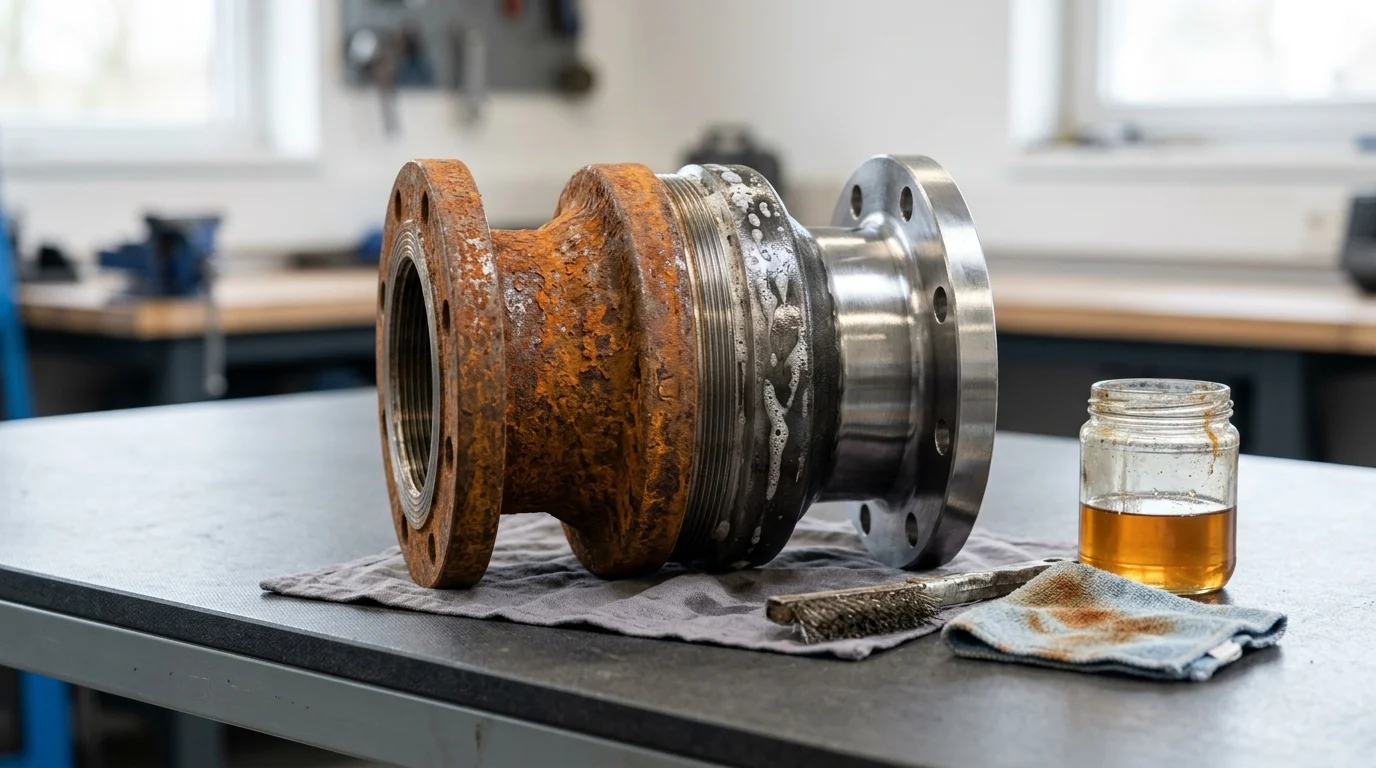
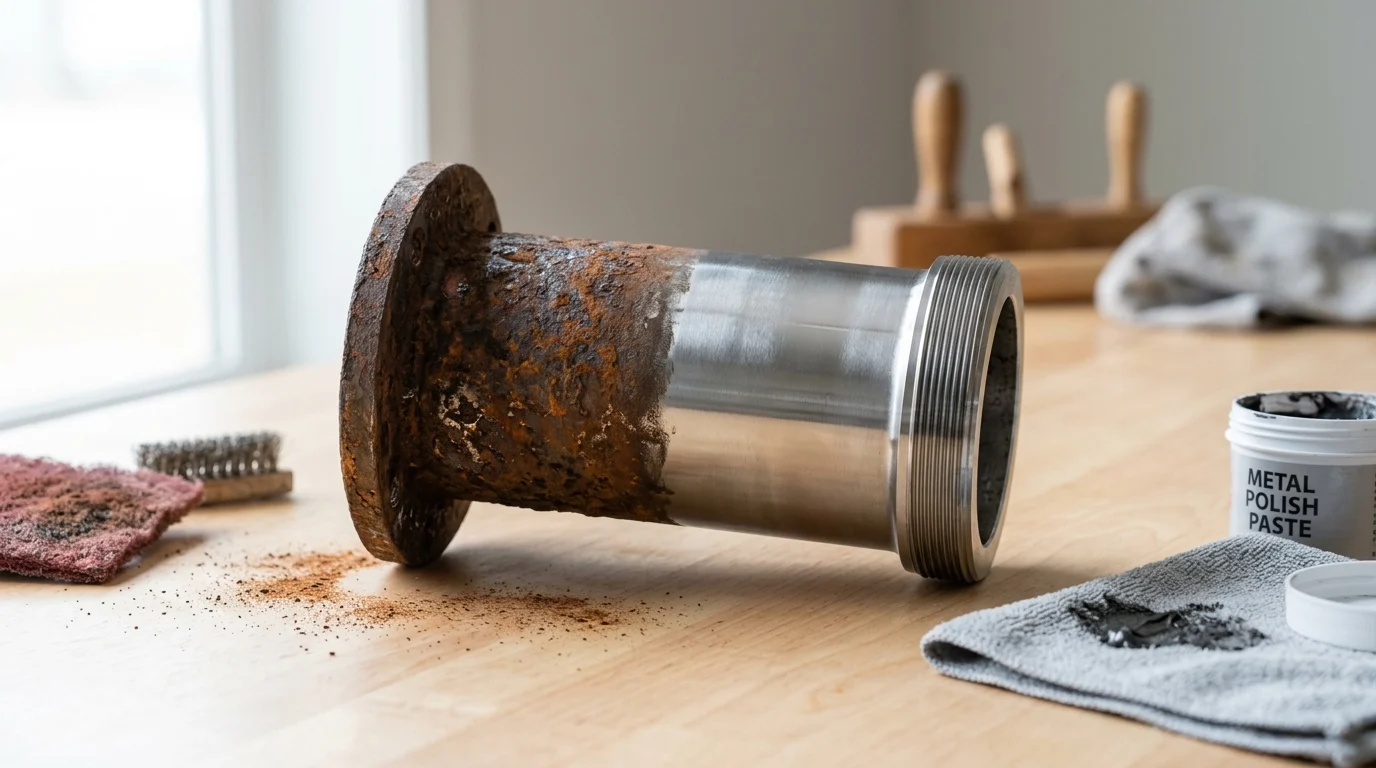
The first application where the choice between matters is the most one common: heavy rust on carbon steel, and mill scale on hot-rolled plate. On a 10–20 m² steel structure, the difference in productivity between a steel wire wheel and a nylon abrasive brush is roughly 2-3×, and on a tightly-bonded mill scale the gap widens further. Because steel wire is harder than the iron-oxide layer it is removing, it can shear the rust off the substrate; a nylon abrasive brush skates over the same surface, generates heat, sheds bristle fragments, and produces little visible progress.
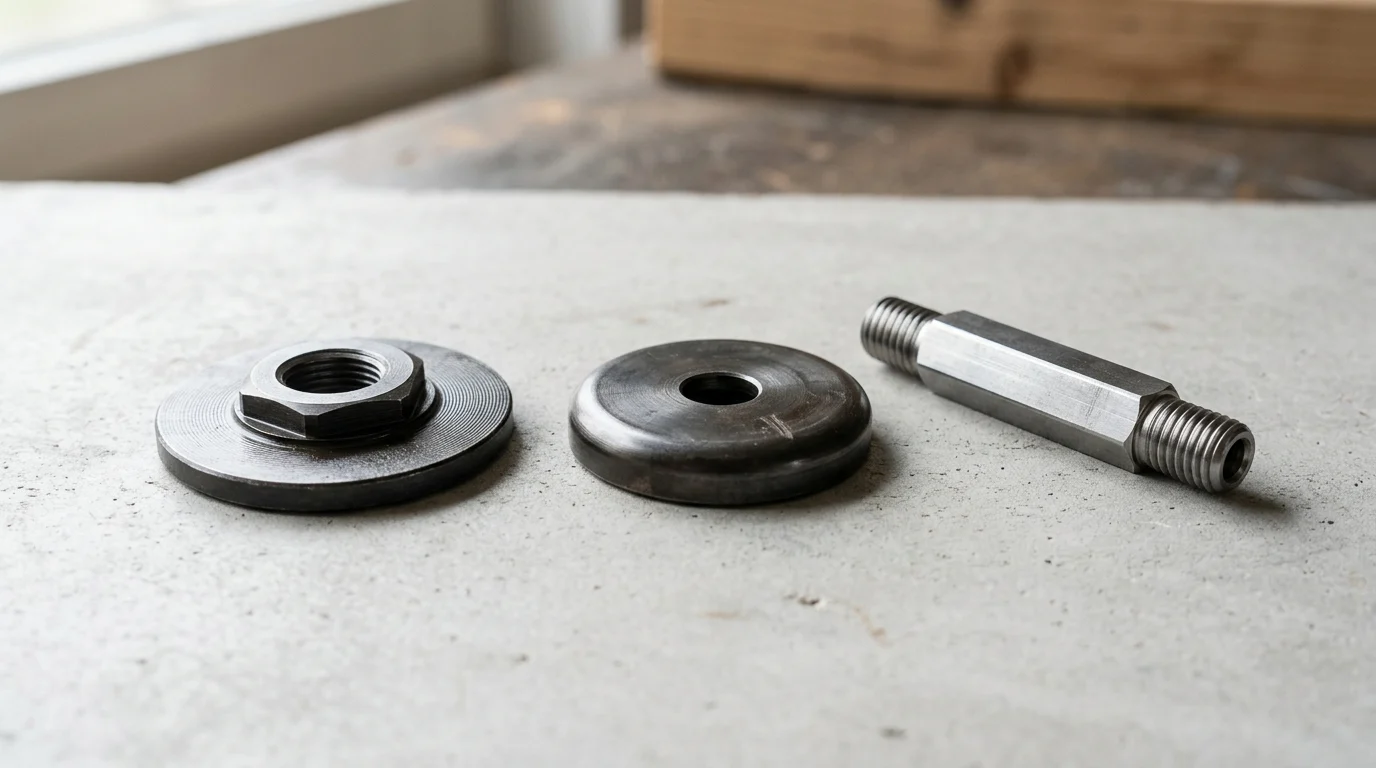
The standard geometry for this application is a 100 mm (4 inch) or 125 mm (5 inch) knot-style cup brush on an angle grinder, with 0.020 inch (0.50 mm) hardened wire at the standard MSOS for the. for the wheel diameter. The nut and arbor on the wire wheel must match the angle grinder spindle (most often M14 for European 115/125 mm grinders, 5/8 inch for North American).
— Recommendation: steel wire for heavy rust and mill scale on carbon steel.
Difference #2 — Surface Preparation Before Painting or Coating
The second application difference is more nuanced, because the answer depends on the substrate. The Master Painters Institute and the SSPC surface-preparation standards (SSPC-SP ,6 to SP 10) define the cleanliness profile for paint adhesion, and the brush selection flows from the cleanliness target. On a carbon steel substrate that needs SSPC-SP 6 (commercial blast) or SP 10 (near-white blast) cleanliness, a steel wire wheel achieves SP 6 in a single pass on most surfaces; the same wire wheel cannot reliably hit SP 10 without a second pass with a finer abrasive.
On a stainless steel, galvanised, or zinc-primed substrate, the steel wire cannot be used because it leaves ferrous contamination that rusts through the paint film. The replacement is a nylon abrasive brush with silicon-carbide or aluminium-oxide grit at ANSI 80–120 grade, which cuts cleanly without depositing metal fragments. Because nylon abrasive cannot match the productivity of steel wire on heavy mill scale, a stainless steel substrate that arrives rusty needs to be bead-blasted first, then finished with the nylon abrasive brush before coating.
— Recommendation: steel wire on carbon steel; nylon abrasive on stainless, galvanised, or zinc-primed substrates.
Difference #3 — Cleaning Welds Before Passivation
The third application difference is the one with the highest cost of getting wrong: weld cleaning on stainless steel fabrications, in particular austenitic 304 and 316 used in sanitary, food-grade and architectural service. The weld zone carries heat tint, oxide scale and carbon-steel fragments from the cutting and grinding upstream. A steel wire brush deposits more carbon-steel fragments into the weld zone — and those fragments rust within weeks of service, producing the brown “flash rust” that disqualifies the fabrication from sanitary inspection.
The correct brush is one of three options, in order of preference:
- A stainless steel wire brush (Type 302/304 or 316 wire) — the wire matches the substrate and leaves no foreign contamination.
- A nylon abrasive brush with aluminium-oxide grit — the abrasive is non-metallic and cuts cleanly. Choose finer grit for passivation prep.
- A dedicated pickling paste plus a nylon scrubbing pad — the chemical route for critical service.
For routine production welding where the steel wire brush is unavoidable, the upgrade to a stainless wire brush costs roughly 20-30% more but and it removes the flash-rust warranty claim that typically follows a plain carbon-steel wire brush in stainless service.
— Recommendation: stainless steel wire or nylon abrasive; never plain steel wire on stainless.
Difference #4 — Polishing Stainless Steel Without Contamination
The fourth application difference is closely related to the third, but with a different end goal. Where weld cleaning targets the heat-tinted zone around a single weld bead, polishing stainless steel targets the entire visible surface — architectural cladding, food-service counters, marine hardware. The contamination risk is identical, and the cost of getting it wrong is identical, but the productivity requirement is more demanding because the entire surface has to be finished, not just the weld zone.
The correct brush for stainless steel polishing is a flap wheel or cup brush made with nylon abrasive filaments impregnated with aluminium-oxide or silicon-carbide grit. The grit grade depends on the surface finish target: ANSI 80 for coarse scratch, ANSI 120-180 for a satin finish, ANSI 240-320 for a near-mirror polish. Because a nylon abrasive brush cannot cut as fast as a steel wire, the productivity is lower; the trade-off is acceptable because the alternative — steel-wire contamination on stainless — is a rejected fabrication.
— Recommendation: nylon abrasive with non-metallic grit; never steel wire on visible stainless surface.
Difference #5 — Deburring Aluminum and Other Soft Metals
The fifth application difference is the one where steel wire does the most damage. Aluminium, copper, brass and soft alloys have two vulnerabilities that a steel wire brush exploits simultaneously. First, the wire is much harder than the substrate, so the wire cuts into the substrate as well as the burr; an aluminium panel that was deburred with a steel wire brush ends up with visible scoring that does not polish out. Second, the wire sheds ferrous fragments that embed in the soft substrate and produce the same flash-rust pattern as on stainless.
The correct brush for aluminium and soft-metal deburring is a nylon abrasive brush with a fine grit (ANSI 180 or finer) that cuts the burr without scoring the substrate. Pair the nylon abrasive with an aluminium-compatible lubricant to prevent loading — dry nylon brushing on aluminium produces a gummy surface that the brush cannot penetrate. The brush geometry for flat aluminium panels is a cup brush; for edges, a wheel brush; for tight inside corners, an end brush.
— Recommendation: nylon abrasive with lubricant; never steel wire on aluminium or copper.
Difference #6 — Working Inside Pipes and Tubes
The sixth application difference is the one where geometry matters more than brush material. Inside a pipe, chimney, hydraulic line or gun barrel, the brush has to reach the inside diameter through an opening that is smaller than the brush itself. The working tool is a pipe brush / chimney brush on an extension rod, with the bristle wrap sized to the inside diameter of the workpiece.
Both steel wire and nylon abrasive pipe brushes are available, and the material choice follows the same rules as the equivalent external application: steel wire for heavy rust and mill scale inside a carbon-steel pipe, nylon abrasive for inside a stainless tube or aluminium tube where contamination is the controlling concern. On a chimney brush used for soot and creosote removal, the geometry and the safety story dominate the material choice; a steel wire chimney brush must never be used on a flue that is still hot, because the wire loses temper and sheds fragments.
The M12 French thread on the working tool matches the extension rod, which in turn matches the electric drill or pneumatic driver on the operator side. The brush must be sized to the inside diameter of the pipe; an over-sized brush stalls the driver and an under-sized brush does not contact the inner wall.
— Recommendation: pipe brush with extension rod; material chosen by the substrate (steel wire on carbon steel pipe, nylon abrasive on stainless / aluminium tube).
Side-by-Side Comparison
| Application | Steel Wire Wheel | Nylon Abrasive Brush | Verdict |
|---|---|---|---|
| Heavy rust on carbon steel | 2-3× faster | Slow, bristle shedding | Steel wire |
| Mill scale on hot-rolled plate | Shears scale cleanly | Skates, generates heat | Steel wire |
| Surface prep before paint (carbon steel) | SSPC-SP 6 in one pass | SSPC-SP 6 in multiple passes | Steel wire |
| Surface prep before paint (stainless) | Not usable (contamination) | ANSI 80-120 grit | Nylon abrasive |
| Weld cleaning on stainless | Use stainless wire | Aluminium-oxide grit | Either (with material choice) |
| Stainless polishing (architectural) | Not usable (contamination) | ANSI 120-320 grit | Nylon abrasive |
| Aluminium deburring | Scores substrate | ANSI 180+ with lubricant | Nylon abrasive |
| Inside pipe / chimney / tube | Pipe brush on rod | Pipe brush on rod | By substrate |
| Operator PPE | Face shield + leather | Respirator + glasses | Different PPE |
How to Pick the Right Brush for Your Application
Three quick rules to apply on the shop floor when the procurement specification does not pre-select the brush:
- If the substrate is stainless, galvanised, zinc-primed, aluminium or copper, default to nylon abrasive. The ferrous contamination from steel wire is not fixable downstream.
- If the contaminant is heavy rust, mill scale or weld spatter, default to steel wire on carbon steel. Nylon abrasive cannot keep up; the operator will overheat the brush and the workpiece.
- If the working geometry is inside a pipe or tube, the geometry is the constraint. Choose the pipe brush with the matching thread, then pick the bristle material by substrate.
The polishing and wire-wheel brush category covers the steel-wire and nylon-A-bbrassive variants, and the pipe brush category covers the inner-hole geometry. Contact the factory for a per-application specification.
Frequently Asked Questions
Can a steel wire wheel be used on stainless steel?
Technically yes, but it is rarely the right choice. Steel wire brushes leave microscopic carbon-steel fragments embedded in the stainless surface; those fragments rust and produce visible rust spots that disqualify the surface from sanitary, food-grade, marine or architectural stainless-steel service. Use a stainless steel wire brush (Type 302/304 or 316 wire) when steel wire is unavoidable, or move to a nylon abrasive brush with silicon-carbide or aluminium-oxide grit when the surface finish requirement allows it.
Can a nylon abrasive brush remove heavy rust?
Not efficiently. Nylon abrasive brushes are designed for surface preparation, paint removal and decorative finishing — not for heavy rust or mill scale. On heavy rust, a nylon brush will skate over the surface, generate heat, and shed bristle fragments before it makes meaningful progress. A steel wire wheel or a knot-style cup brush is the correct first step; a nylon abrasive brush is the correct second step before coating.
Which brush is faster at removing paint?
On a flat hard substrate, a steel wire wheel removes old paint roughly 2-3× faster than a nylon abrasive brush. On a soft substrate (aluminium, softwood), the steel wire can damage the substrate and the nylon abrasive is the safer choice at the cost of speed. On a curved surface or weld seam, the gap narrows because the brush geometry matches better.
What PPE does a steel wire wheel require?
Steel wire brush operation throws wire fragments and sparks at speed. The operator PPE per OSHA 29 CFR 1910 is: ANSI Z87.1-rated face shield (not just safety glasses), hearing protection if sound level exceeds 85 dBA, leather or cut-resistant gloves, flame-resistant clothing, and closed-toe leather boots. Nylon abrasive generates mostly fine dust, so the PPE emphasis shifts to respirator (N95 or better) and safety glasses. The OSHA Safety and Health Topics page on power tools covers the operator-side requirements in detail.
What grit or wire thickness should I specify?
For steel wire wheels, 0.014 inch (0.35 mm) is the general-purpose wire thickness; 0.020 inch (0.50 mm) for heavy rust and weld spatter; 0.008 inch (0.20 mm) for fine finishing. For nylon abrasive brushes, ANSI grit grade 80 (coarse) to 180 (medium) to 320 (fine) covers the typical industrial range. Specify grit grade and wire thickness together with the substrate hardness and the surface finish target.
What is the maximum safe operating speed for a steel wire wheel?
The maximum safe operating speed (MSOS) is printed on every compliant wheel brush, expressed in metres per second. The typical MSOS for a 100 mm (4 inch) cup brush is 45 m/s; for a 150 mm (6 inch) wheel brush, 40 m/s; for a 200 mm (8 inch) wheel brush, 35 m/s. Exceeding the MSOS risks wire breakage and operator injury; the FEPA and ANSI B165.1 standards publish the binding limits.
Can a nylon abrasive brush be used on aluminium?
Yes — nylon abrasive is usually the safer choice for aluminium because it does not score or contaminate the soft substrate. Specify a nylon brush with silicon-carbide or aluminium-oxide grit rather than a steel-wire brush, and pair the brushing with an approved aluminium-compatible lubricant to prevent loading. The brush diameter should match the contour: cup brush for flat panels, wheel brush for edges, end brush for tight inside corners.