




If you source hardware components for electric tools, industrial equipment, or engineered assemblies, I can tell you from first-hand experience that most buyers receive a B2B quote that looks like a single number — but actually contains seven distinct cost layers. In my years running Guling Hardware, I have seen buyers who understood each line item consistently negotiate better long-term terms than those who compared bottom-line prices alone. I wrote this guide because I want the buyers we work with to have that same advantage. When we work with new buyers, we find that the ones who get the best long-term outcomes are the ones who understand each line item, not just the total. That understanding lets you compare quotes accurately, negotiate from knowledge, and avoid surprises when the first invoice arrives.
In this article, I walk through each of the seven cost components that typically appear in a professional B2B hardware quote. We have been manufacturing angle grinder pressure plates, hydraulic fittings, conversion joints, and pipe brush assemblies for industrial buyers worldwide, and we have put together this breakdown based on how our own quotes are structured and why each line exists. Because understanding cost components is the foundation of every successful procurement relationship we have built, we treat this guide as the starting point for any new buyer conversation.
Line Item 1 — Raw Material Costs
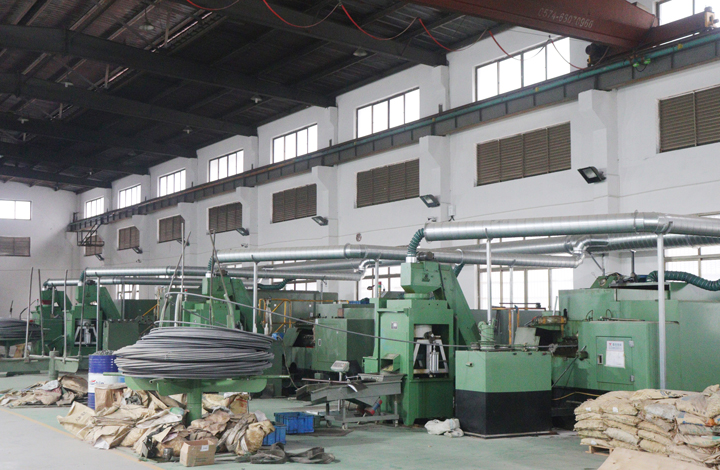
In my experience reviewing thousands of hardware quotes, raw material costs are almost always the single largest line item — typically 35% to 55% of the total unit price depending on part geometry, material grade, and commodity conditions. For the angle grinder pressure plates and hydraulic fittings we produce, this means the landed cost of the steel bar, rod, or forgings — including alloy surcharges. We see this cost driver dominate every quote, and we always explain it clearly because surprises here cause the most friction between buyers and suppliers.
When we quote an angle grinder pressure plate or a hydraulic fitting, we price the steel first. The main variables are the material grade (carbon steel, alloy steel, stainless steel 304/316, or specialty alloys), the form (bar, rod, closed-die forging, or powdered metal), and the weight after machining allowance and yield losses. We typically target a material yield of 60% to 75% from forging to finished part. Our engineering team reviews every material specification against the buyer's application to ensure we are not overspecifying — because overspecifying is one of the most common ways buyers end up paying more than necessary, and we flag it every time we see it.
Because steel prices fluctuate with commodity markets, I personally advise every buyer evaluating large-volume orders to lock in material pricing at the time of order confirmation. We have seen cases where buyers who ordered and confirmed in January received a significant price adjustment by March when steel surcharges shifted — and in most of those cases, the confusion could have been avoided if both sides had agreed on a material price adjustment clause in the purchase contract. Our quotes always include raw material as a separate, transparent line item for this reason, and I encourage every buyer to ask for this breakdown from any supplier they are evaluating.
Line Item 2 — Machining & Processing Costs
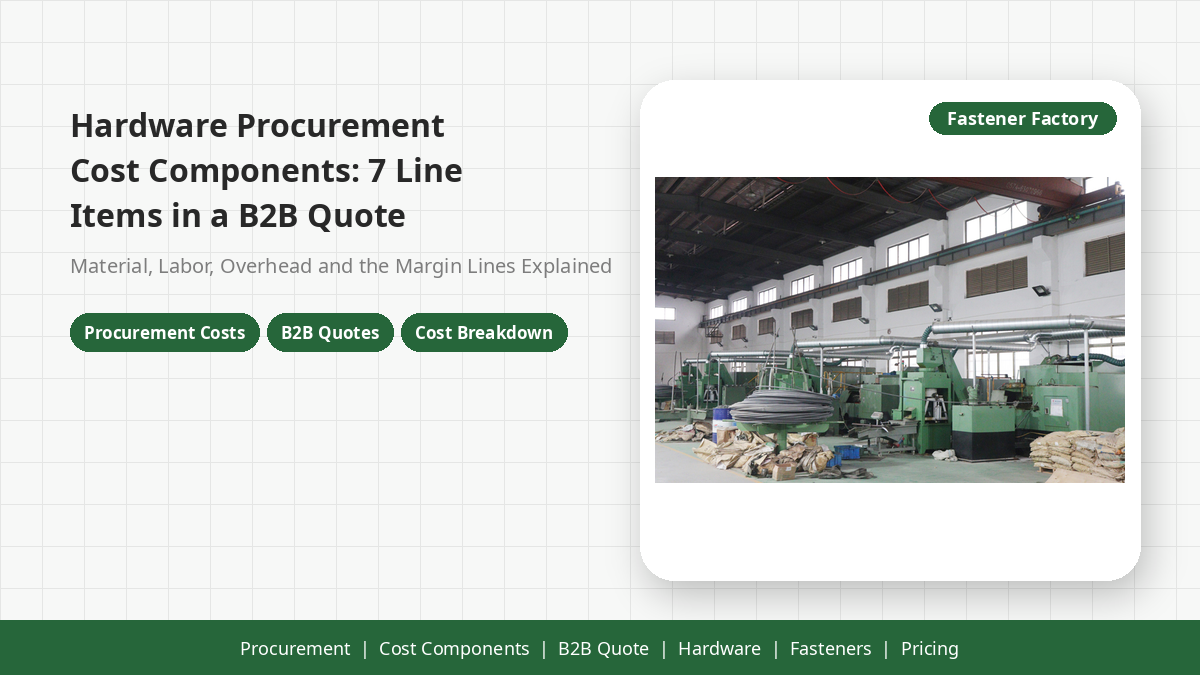
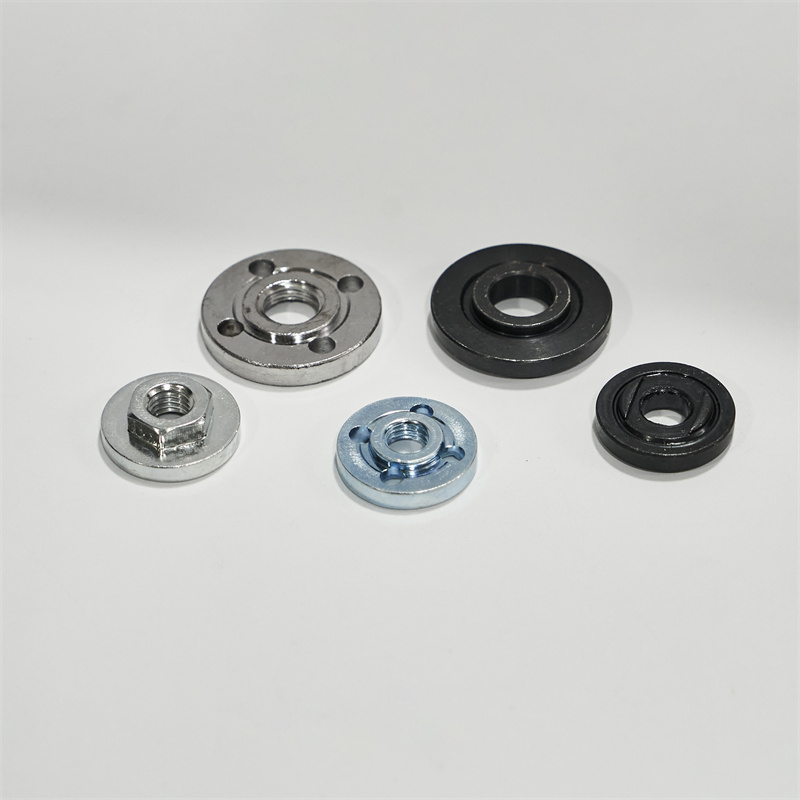
Once we have the raw forging or blank, the part goes through machining operations that add precision geometry. In our factory, we run 40+ fully automatic CNC machines alongside cold heading lines, and I can tell you that machining costs represent typically 20% to 35% of the total unit cost for standard precision hardware — making it the second-largest cost driver on most of the quotes we produce.
Our factory operates 40+ fully automatic CNC machines alongside cold heading lines and automatic tapping equipment. The cost per part for machining depends on the complexity of the part geometry, the dimensional tolerance required, and the heat treatment specification. Our engineering team has produced thousands of precision parts to tolerances of ±0.05mm with high concentricity, and we always advise buyers on whether their tolerance specification is appropriate for their actual application — because specifying tighter tolerances than necessary is a cost we see often and always flag.
Thread processing is one area where we see the most variation in buyer understanding, and I have personally explained this trade-off hundreds of times to buyers who came in assuming CNC was always the right answer. A part with M10x1.5 threads produced by cold heading is substantially cheaper per unit than the same thread produced by CNC machining — but cold heading requires the part geometry to be compatible with the heading process, which is a function of the original forging design. When buyers send us drawings with threads that are incompatible with cold heading, we redesign the process in consultation with them, and we explain the cost trade-off clearly. I believe that our OEM hardware quality control process is most effective when this kind of engineering conversation happens before we commit to a production run, not after.
Line Item 3 — Tooling & Mold Amortization
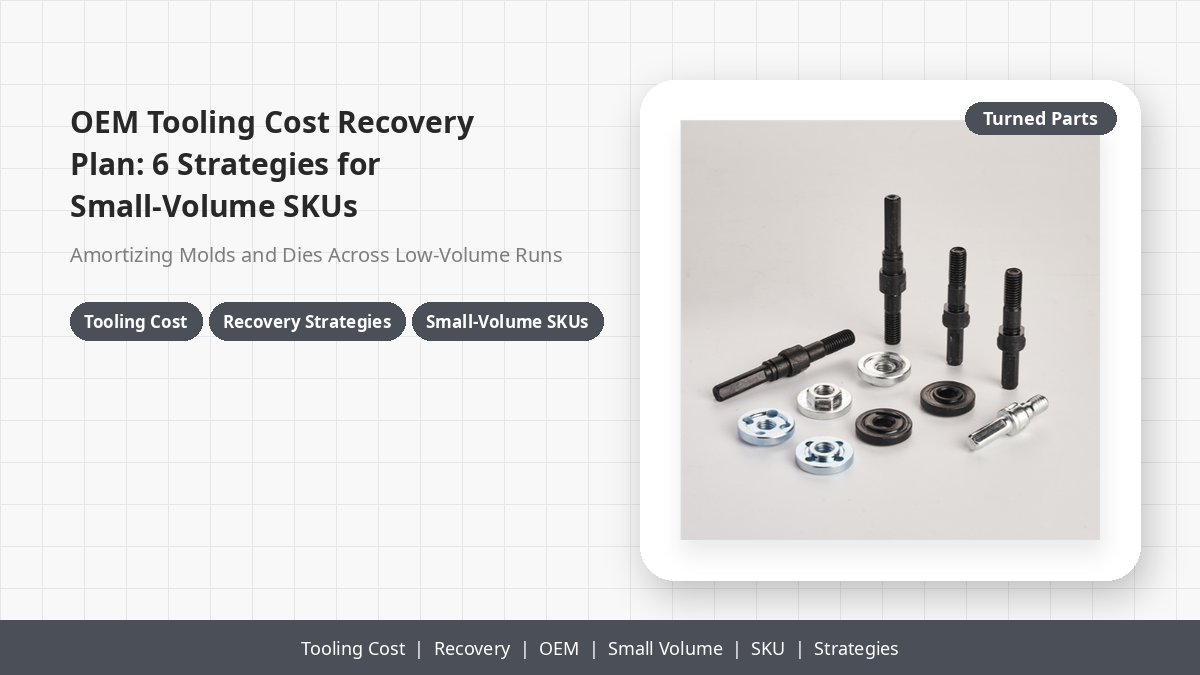
Tooling costs are one of the most misunderstood line items in B2B hardware quotes, and I have personally seen this cause unnecessary friction in buyer relationships — sometimes after the first order has already been placed. Tooling refers to the dedicated equipment needed to produce your specific part — the forging dies, injection molds, jigs, fixtures, and special gauges that do not exist until we make them for your order. We always explain tooling costs upfront because we believe it is one of the areas where transparency saves everyone time and money.
Tooling is always a one-time upfront cost that is then amortized (spread) across the total order quantity over the life of the tooling. The amortization period is important to understand, and I always explain it carefully because it is where we see the most confusion. If you order 2,000 pieces per year and the tooling lasts for 100,000 shots, the tooling cost per piece is very different than if you order 20,000 pieces per year. We typically amortize tooling over the first 50,000 to 100,000 pieces of production, after which the tooling cost effectively disappears from the quote — and our quotes always show you the exact amortization schedule so you can see when that happens.
For new product development or custom angle grinder accessories with unique geometry, tooling can represent 5% to 15% of the total first-year cost, and we always show tooling as a separate, clearly labeled line item so you can see exactly what you are paying and why. I personally oversee the tooling ownership documentation because I have seen disputes arise on this exact issue with other suppliers. We also maintain a tooling ownership log that documents which party owns the tooling once it is fully amortized — an important detail that prevents disputes on repeat orders, and one we are happy to share with any buyer upfront.
Line Item 4 — Quality Control & Testing
Quality control is a line item that some buyers try to negotiate away in search of a lower price, and it is one of the places where we will not compromise — this is a firm position I take as CEO, because our experience has taught us that cutting QC is a false economy. Our QC costs cover the inspection and testing operations that verify every batch meets the agreed specifications before shipment. In our view, the cost of escaping a single bad batch to a buyer's production line is almost always higher than the cost of the inspection that would have caught it.
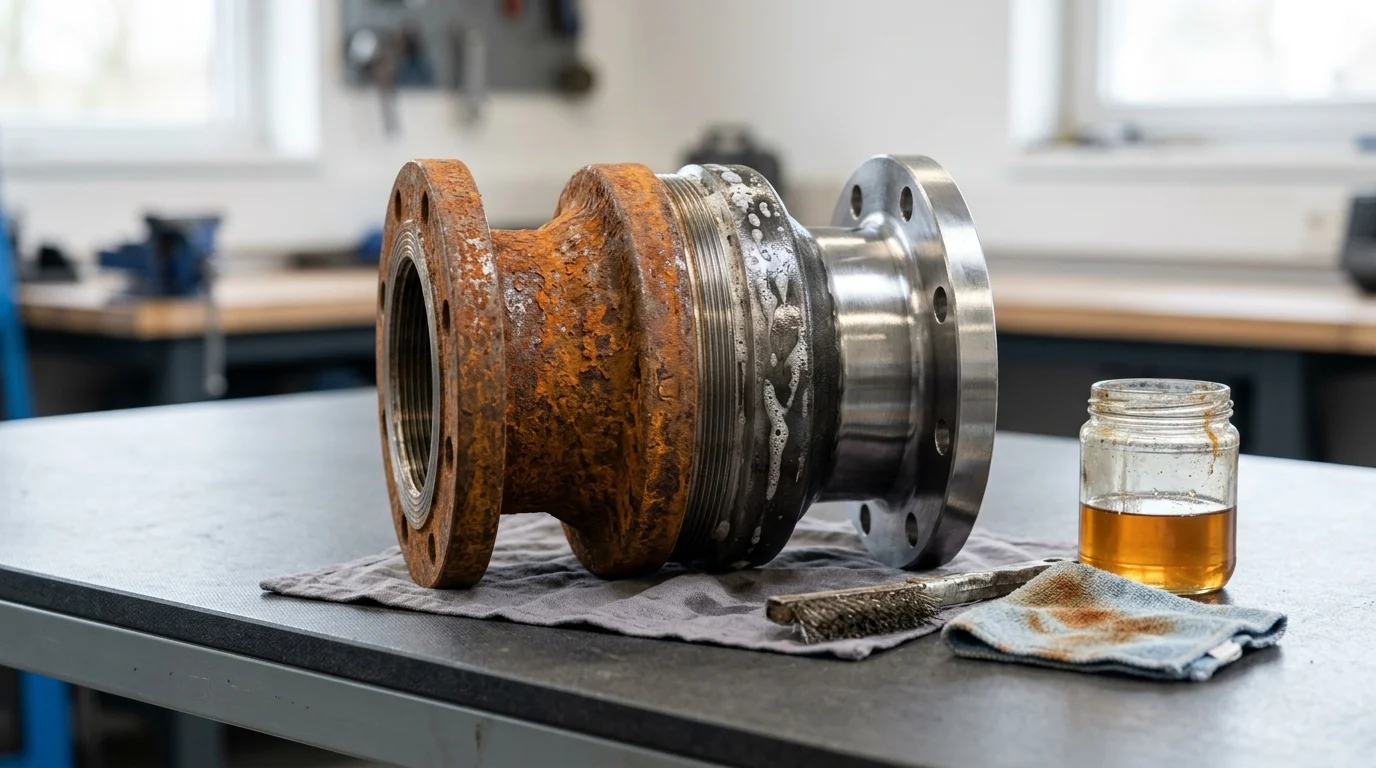
For standard hardware orders, our QC process includes dimensional inspection against drawing tolerances, visual checks for surface defects, and material certification verification. For parts like pressure plates or hydraulic fittings where mechanical performance is critical, we add pressure testing, dynamic balancing, and salt spray rust prevention testing. Our factory conducts three core tests for our pressure plate product line: pressure testing to verify structural integrity, dynamic balancing to ensure vibration-free operation at operating speeds, and salt spray testing to validate corrosion resistance. I personally review our QC protocols with every new buyer because I want them to understand exactly what they are paying for and what level of consistency they can expect from our production.
We use a fully automatic CCD optical sorting machine for all-round quality inspection — a system that catches defects that manual inspection can miss, including micro-cracks, surface irregularities, and dimensional deviations outside tolerance. Because we run this equipment on every production batch, we can provide defect escape rates well below industry average. Because we have invested in this inspection infrastructure specifically to reduce the cost of quality failures for our buyers, we treat QC as a value-add line item rather than overhead. I have seen the cost of escaped defects in other suppliers' shipments to buyers, and that experience is exactly why we made the decision to invest in this equipment and run it on every batch we produce.
Line Item 5 — Packaging & Labeling
Packaging is often the last thing buyers think about and the first place they notice a problem when parts arrive damaged. I have personally handled customer complaints about packaging damage that turned out to have been preventable with better specification upfront, and that experience has made us very thorough on this line item. Our packaging line item covers the materials and labor to pack each unit in the configuration agreed at the time of the order — typically inner polybag or foam wrap, inner carton, and outer master carton with appropriate cushioning for the shipment method.
For export orders, packaging costs also include labeling that complies with the destination country's import requirements: country of origin marking, material content labels where required, and any buyer-specific barcodes or lot numbers. We have shipped to more than 30 countries and we have the experience to advise on what labeling documentation each market requires — our team has handled labeling requirements for markets across Asia, Europe, North America, and Latin America. We include this cost as a separate line item rather than bundling it into the unit price, because bundled packaging costs tend to become invisible and then resurface as a surprise when requirements change, and I have personally resolved more than a few disputes caused by that practice.
One common issue we help buyers avoid: palletization and export crating for sea freight. If your parts will be shipped as sea freight, the cargo needs to be palletized and in some cases crated to survive container stacking pressures and humidity. We always confirm the freight method before finalizing the packaging line item, because air freight and sea freight packaging specifications are meaningfully different — and I have personally seen the damage that happens when buyers assume they are the same.
Line Item 6 — Logistics & Freight
Logistics costs in a B2B hardware quote cover the cost of getting the finished goods from our factory in Yuyao, Ningbo, to your designated delivery point. We ship to buyers in more than 30 countries, and I can tell you from our operational records that logistics costs vary more between shipping seasons than any other line item on our quotes. This line item typically includes domestic trucking to the port or airport, port handling and documentation fees, and the international freight cost itself.
For most of our export orders, we quote on an FOB Ningbo basis, which means the logistics cost from our factory to the port of loading is included, and the buyer arranges and pays for the ocean or air freight from there. We can also quote CIF or DDP if you prefer to have one point of contact for the entire delivery. We find that buyers who have their own freight forwarding relationships typically prefer FOB terms, while newer entrants or buyers shipping to new markets often find DDP terms more convenient despite the higher total cost. We are transparent about the cost difference between these terms because I want every buyer to understand what they are getting for the additional cost of DDP.
Because international freight rates are volatile — ocean freight rates have fluctuated by more than 200% between peak and off-peak seasons — we update logistics cost estimates at the time of each order confirmation rather than locking them in at the quote stage unless specifically requested. We always provide a freight estimate in the quote and then confirm the actual cost when the shipment date is known. I have had buyers ask me why we do not lock in freight costs, and my answer is always the same: locking in freight three months before shipment means we are guessing on fuel prices, carrier capacity, and port congestion — none of which are predictable. Our approach is to give you the best estimate and update it with real numbers when we have a confirmed shipment date.
Line Item 7 — Overhead & Administrative Costs
The final line item in a professional B2B hardware quote is overhead and administrative cost, covering sales and engineering support, export documentation, payment processing, utilities, equipment depreciation, and margin. Our approach at Guling Hardware is to present overhead as a transparent line rather than inflating individual cost components, because I believe this builds the kind of trust that leads to long-term procurement relationships rather than one-off transactions.
We present overhead as a transparent line rather than inflating individual cost components. We have found that this approach builds longer-term trust with buyers because it lets them see exactly where their money goes. Some buyers ask us why overhead is a separate line item rather than being embedded in the unit price — our answer is that embedded overhead obscures the real cost drivers and makes it harder for buyers to compare quotes on an equivalent basis. When overhead is a visible line item, you can evaluate whether a supplier's overhead structure is appropriate for the complexity of your order.
Because we have built our factory's overhead structure specifically to support mid-to-high-end precision hardware for electric tool applications, we are competitive on total cost for quality-conscious buyers while remaining transparent about where that cost comes from. If you are comparing quotes from multiple suppliers, I recommend requesting the same line-item breakdown from each one so you can evaluate them properly. A lower overhead percentage from one supplier may simply mean they are bundling costs differently, not that they are actually cheaper. I have reviewed competitor quotes for our core products and I can confirm: the transparency we offer is intentional, and it reflects how I believe a long-term supplier relationship should work.
Summary: The 7 Cost Line Items
| # | Line Item | Typical % of Total Unit Cost | Key Variables |
|---|---|---|---|
| 1 | Raw Material Costs | 35–55% | Steel grade, part weight, commodity market conditions, yield rate |
| 2 | Machining & Processing | 20–35% | Part complexity, tolerance, heat treatment, thread method |
| 3 | Tooling & Mold Amortization | 5–15% (first run) | Order quantity, tooling life, amortization period |
| 4 | Quality Control & Testing | 3–8% | Inspection level, required tests, defect escape rate target |
| 5 | Packaging & Labeling | 2–5% | Export vs. domestic, labeling requirements, freight method |
| 6 | Logistics & Freight | Variable | FOB vs. CIF/DDP, shipping method, fuel surcharges, season |
| 7 | Overhead & Administrative | 5–12% | Engineering support, documentation, payment terms, margin |
Understanding these seven components gives you a structural advantage in every B2B hardware procurement conversation. In my experience working with buyers across 30+ countries, the buyers who come back for repeat orders are always the ones who took the time to understand the cost structure upfront. Whether you are sourcing angle grinder pressure plates, hydraulic fittings, conversion joints, or pipe brush assemblies, the same cost framework applies — and now you know what questions to ask. We are always happy to walk through our quotes in detail with any prospective buyer, and I personally make time to speak with buyers who want this kind of transparency.
If you are ready to receive a detailed, line-item quote for your next hardware procurement project, we welcome your inquiry. We typically respond to complete RFQs within 2 business days. You can reach us directly through our contact page or by emailing admin@glinhardware.com. For buyers evaluating our production capabilities, we recommend reviewing our background and factory information to understand the scale and specialization we bring to each order.