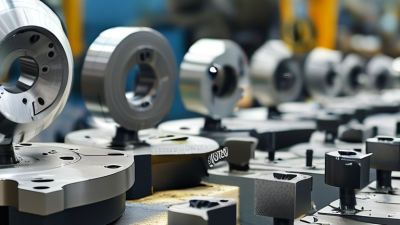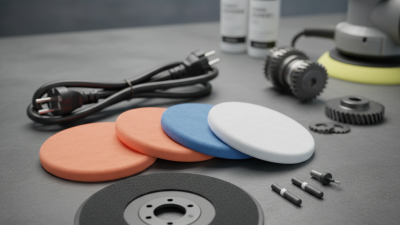
China's polishing equipment industry plays a big role across various sectors like automotive, electronics, aerospace, stone processing, and precision hardware manufacturing. When it comes to these systems, things like Polishing Machine Parts are pretty critical—they really affect surface quality, how often machines need fixing, and the overall running costs. Small issues can actually have a big impact. For example, a worn-out spindle, an unstable pad holder, or a polishing wheel that's out of balance can leave visible scratches or marks on entire batches of products. That’s why attention to detail really matters.
Industry numbers back this up too. For instance, Grand View Research reported that the global metal finishing market hit around USD 110 billion in 2023, largely fueled by automation and precision manufacturing. Meanwhile, MarketsandMarkets points out that the demand for advanced abrasives, polishing systems, and spare parts is only going to grow through 2028. On top of that, the China Machine Tool Industry Association keeps highlighting ongoing investments in high-end manufacturing gear and smarter production lines. These trends open up a lot of opportunities for Chinese suppliers, but it’s important to remember: just because the market is big doesn’t automatically mean all suppliers are top quality.
This guide aims to give you a practical look at ten Chinese suppliers, based on real criteria. We look at things like traceability of materials, how accurate their machining processes are, how compatible their parts are, how fast they can provide replacements, their experience with exporting, and the clarity of their technical documentation. Some companies like Hangzhou Westlake Machinery Equipment, Shanghai Qinuo Industry, Shenzhen Perfect Precision Products, and others are included. But honestly, just knowing their names isn’t enough. Some factories look really impressive in photos, but if their tolerance records aren’t available or transparent, it’s a red flag.
If you’re shopping around, make sure to ask for detailed drawings, inspection reports, sample parts, and clear warranty policies. Getting ISO 9001 certification helps build confidence, but it shouldn’t replace independent testing of the parts. Also, keep in mind that rankings can change over time as companies expand their capacity, improve service, or perfect their product consistency. That’s why it’s worth paying attention—what looks good now might not tomorrow. Think about it: choosing a cheaper component might save you some bucks upfront, but if it wears out faster, it could end up costing you more in labor, scrap, and downtime later on. So, this overview considers these top ten as a helpful shortlist, not the final word on who’s best forever.
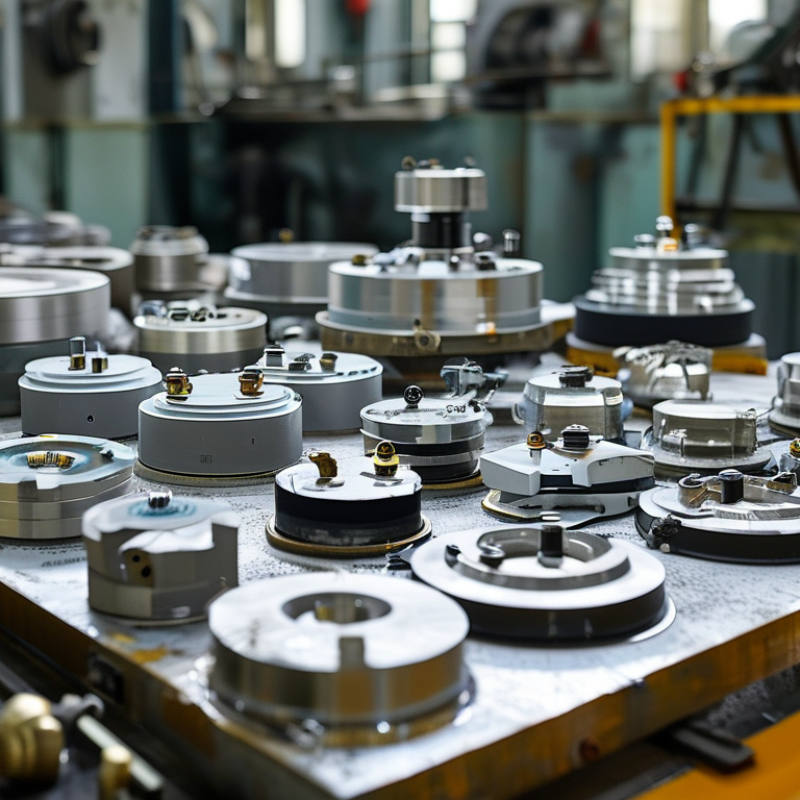
Polishing machine parts are the working components that control contact, speed, pressure, and surface finish. They include abrasive wheels, polishing pads, spindles, bearings, seals, fixtures, guards, and control modules. Each part has a specific role. A worn bearing can create vibration, while a damaged pad may leave uneven marks across a metal panel.
In practical maintenance work, small parts often cause large quality problems. I once focused on abrasive selection and overlooked a loose fixture. The result was wasted material and an inconsistent finish. This experience showed me that parts must be checked as a complete system. Good suppliers should provide accurate dimensions, material information, batch records, and clear compatibility details. Heat resistance and balance also matter, especially during continuous production. However, no checklist is perfect. Operators should still inspect noise, vibration, dust, and surface changes during use.
Tips: Compare drawings before ordering replacement parts. Check spindle sizes, thread direction, hardness, and operating speed. Keep one tested spare for critical components. Record replacement dates and machine conditions. Do not rely only on a low price; an inexpensive seal may fail quickly and contaminate the polishing area. Suppliers with responsive technical support are more reliable when measurements or installation details remain unclear.
Choosing among China’s top polishing machine parts suppliers requires more than comparing prices. Check whether the supplier understands your machine’s pressure, speed, and operating environment. Request material certificates, dimensional reports, and recent production photos. A reliable supplier should explain tolerances clearly, not hide behind general claims. Ask for a sample part before placing a large order. Measure its thickness, hole position, surface finish, and fit on your equipment. Small errors can cause vibration, uneven polishing, or early wear.
Tips: Visit the factory online or in person. Review its inspection process. Ask who checks incoming materials and finished parts. Confirm whether inspection records are traceable by batch number. Suppliers with engineering teams can often suggest better alloys, coatings, or replacement designs. Their advice should include practical limits, not only sales language. Also check whether they produce related Cutting Machine Parts, since broader experience may reveal useful machining capabilities. However, a wide product range does not guarantee strong polishing expertise.
A useful lesson from supplier evaluations is that the cheapest quote can create hidden costs. Test communication with a detailed drawing and a difficult question. Notice the response time and technical accuracy. No checklist is perfect. Even a promising sample may not represent every production batch, so define acceptance standards in writing. Ask about tooling ownership, packaging, replacement procedures, and export documentation. If answers remain vague, pause the purchase. Reliability grows from evidence, consistent quality, and honest discussion of limitations.
China’s top ten polishing machine parts suppliers are often evaluated by measurable performance, not catalog size. Grand View Research valued the global metal finishing market at more than USD 100 billion in 2023, showing strong demand for reliable surface-treatment equipment and replacement parts. In this market, a capable Polishing Machine parts supplier should provide abrasive heads, spindles, bearings, seals, control modules, and compatible electrical components.
Factory experience matters. During supplier audits, buyers should inspect machining accuracy, material certificates, and inspection records. A spindle with visible runout may create uneven scratches across stainless-steel panels. That small defect can increase rework and abrasive consumption. Suppliers with ISO 9001-based quality systems usually offer clearer traceability, although certification alone does not guarantee stable production.
Check the details.
A practical shortlist should compare tolerance control, sample testing, delivery consistency, and technical support. Industry purchasing reports commonly identify lead time and after-sales responsiveness as major manufacturing procurement risks. Ask for dimensional reports, batch records, and failure-analysis procedures before placing volume orders. Some suppliers perform well on standard parts but struggle with custom shafts or high-temperature seals. That weakness deserves attention. The “top ten” ranking is never completely objective; application fit, inspection discipline, and communication quality can change the result. A careful buyer should test parts under real polishing pressure, coolant exposure, and continuous operating cycles.
China’s top 10 polishing machine parts suppliers differ in parts range, machining control, and after-sales support. Supplier One provides polishing wheels, spindle assemblies, and protective covers for stone equipment. Supplier Two focuses on diamond tools, water pumps, and adjustable worktables. Supplier Three supplies control panels, belts, bearings, and replacement switches for metal polishing lines.
Supplier Four offers custom shafts, motor couplings, and the Polishing Machine Flange, often produced from stainless steel or hardened alloy. Supplier Five provides abrasive discs, polishing pads, and coolant circulation units. Supplier Six handles vibration-resistant frames, guards, and pneumatic components. Supplier Seven is more suitable for automatic systems, supplying servo motors, sensors, and programmable control cabinets. Clear wiring diagrams matter here.
Supplier Eight provides ceramic and glass polishing parts, including guide rails, suction pads, and precision holders. Supplier Nine supports heavy-duty machines with gearboxes, rollers, hydraulic cylinders, and reinforced tables. Supplier Ten combines standard components with made-to-order parts, including reverse-engineered covers and mounting plates.
Services often separate a dependable supplier from a cheap catalog. Many provide drawing review, sample production, dimensional inspection, material certificates, and export packing. Some also offer remote installation guidance, spare-parts lists, and troubleshooting videos. Ask for tolerance data. Ask for it in writing. A supplier may promise compatibility, yet overlook shaft diameter, thread direction, or water exposure. I would request inspection photos and a trial piece before ordering large quantities. Even experienced buyers can miss small alignment errors.
Comparative market overview of anonymized Chinese supplier profiles. The information focuses on commonly supplied polishing-machine parts, technical capabilities, and support services rather than company or brand names.
| Position | Supplier Profile | Core Parts Supplied | Compatible Polishing Equipment | Typical Materials | Engineering and Customization Services | Quality and Documentation | Typical Lead Time | Best-Fit Applications |
|---|---|---|---|---|---|---|---|---|
| 1 | Supplier Profile A Precision Motion Specialist |
Spindles Bearings Couplings Linear guides | Automatic surface polishing machines, CNC polishing centers, and robotic polishing cells. | Hardened steel, stainless steel, aluminum, ceramics, and engineered stone. | Spindle selection, shaft and housing adaptation, bearing preload specification, dimensional drawings, and replacement-part matching. | Dimensional inspection reports, material certificates when requested, balancing records for selected rotating parts, and export packing documentation. | Common replacement parts: 7–20 working days. Customized assemblies: 25–45 working days. | High-speed polishing, continuous-duty production, and applications requiring low runout. |
| 2 | Supplier Profile B Abrasive System Specialist |
Buffing wheels Abrasive belts Polishing compounds Backing pads | Belt polishers, vibratory finishing equipment, bench polishers, and automated buffing lines. | Stainless steel, carbon steel, brass, copper, aluminum, glass, and plastics. | Grit and hardness selection, process trials, surface-finish recommendations, wheel-size customization, and sample testing. | Abrasive grit information, product specifications, batch identification, and application test records for trial orders. | Standard consumables: 5–15 working days. Special dimensions or formulations: 15–30 working days. | Deburring, satin finishing, mirror polishing, oxide removal, and preparation before plating. |
| 3 | Supplier Profile C Workholding and Fixturing Specialist |
Clamping fixtures Chucks Mandrels Vacuum fixtures | Rotary polishing machines, planetary polishers, edge polishers, and custom robotic systems. | Metal parts, glass panels, ceramic components, stone slabs, and molded plastic parts. | Part modeling, fixture design, jaw profiling, vacuum-channel layout, prototype machining, and repeatability testing. | 2D/3D drawings, fixture inspection reports, clamping-force records where applicable, and sample approval procedures. | Standard fixtures: 15–30 working days. Engineered fixtures: 30–60 working days. | Irregular components, thin parts, delicate surfaces, and multi-part batch processing. |
| 4 | Supplier Profile D Spindle and Drive Specialist |
Electric spindles Motor assemblies Drive belts Pulleys | High-speed grinding and polishing heads, CNC finishing machines, and automated polishing stations. | Steel, stainless steel, aluminum, titanium, glass, and composite materials. | Power and speed matching, mounting-flange adaptation, cooling-system selection, wiring diagrams, and spindle replacement guidance. | Runout measurement, no-load testing, electrical test data, installation instructions, and maintenance recommendations. | Stock motor or belt parts: 7–15 working days. Customized spindle systems: 30–50 working days. | Applications requiring controlled speed, stable torque, and repeatable surface finish. |
| 5 | Supplier Profile E Coolant and Filtration Specialist |
Coolant pumps Filters Nozzles Tanks | Wet polishing machines, stone and glass polishing lines, grinding systems, and lapping equipment. | Glass, granite, marble, ceramics, silicon, carbide, and metallic workpieces. | Flow-rate calculation, filtration-unit sizing, piping layout, nozzle positioning, tank customization, and water-recycling integration. | Pump performance data, filter ratings, flow testing, leak testing, and operating-maintenance documentation. | Standard pumps and filters: 7–20 working days. Complete coolant modules: 20–40 working days. | Wet processing, sludge control, abrasive-particle separation, and longer tool life. |
| 6 | Supplier Profile F Automation and Control Specialist |
Control panels Sensors Servo components Safety devices | Automatic polishing lines, robotic polishing cells, indexing machines, and multi-axis finishing equipment. | Metal, glass, ceramic, stone, wood, and composite products. | Electrical schematic design, sensor integration, motion-sequence programming, remote troubleshooting, and retrofit planning. | Wiring diagrams, input/output lists, functional testing, parameter backups, and machine safety documentation. | Control components: 10–25 working days. Retrofit or integrated control packages: 30–70 working days. | Automated production, recipe-based processing, cycle monitoring, and labor reduction. |
| 7 | Supplier Profile G Machine Structure Specialist |
Machine beds Columns Guide rails Protective covers | Heavy-duty polishing machines, wide-belt systems, slab polishing lines, and custom finishing equipment. | Granite, marble, engineered stone, steel plate, aluminum profiles, and large fabricated parts. | Structural design, vibration-reduction measures, rail alignment, guarding design, corrosion protection, and machine-base modification. | Weld inspection records where applicable, alignment reports, coating specifications, and assembly drawings. | Structural replacement parts: 20–45 working days. Custom frames and modules: 45–90 working days. | Large workpieces, high-load processing, long production cycles, and reduced machine vibration. |
| 8 | Supplier Profile H Dressing and Tooling Specialist |
Diamond dressers Roller dressers Tool holders Dressing units | Grinding-polishing combination machines, edge-processing lines, ceramic finishing systems, and CNC equipment. | Steel, carbide, ceramics, glass, stone, and superhard abrasive wheels. | Tool geometry selection, dressing-parameter recommendations, holder adaptation, wheel profiling, and process optimization. | Tool dimensions, abrasive-grade information, inspection data, and application guidance for wheel conditioning. | Standard tools: 10–20 working days. Special profiles: 20–45 working days. | Wheel maintenance, profile accuracy, cutting-edge consistency, and reduced polishing defects. |
| 9 | Supplier Profile I Transmission and Sealing Specialist |
Gearboxes Timing belts Shaft seals Chain assemblies | Rotary tables, conveyor polishing lines, indexing systems, and automated material-handling units. | Metal components, stone products, glass, ceramics, and packaged industrial parts. | Torque and speed calculation, reduction-ratio selection, shaft adaptation, sealing selection, and preventive-maintenance planning. | Gearbox test data, dimensional drawings, lubrication instructions, seal specifications, and spare-parts lists. | Standard transmission parts: 7–20 working days. Customized drive assemblies: 25–50 working days. | Stable workpiece movement, rotary indexing, conveyor synchronization, and protected operation in wet environments. |
| 10 | Supplier Profile J After-Sales and Retrofit Specialist |
Replacement kits Wear plates Seals Electrical spares | Legacy polishing machines, imported equipment, manual polishers, and mixed-brand production lines. | Metal, stone, glass, ceramics, wood, and plastic components. | Reverse engineering, obsolete-part replacement, machine inspection, retrofit installation, preventive maintenance, and operator training. | Replacement drawings, inspection photographs, part-number cross-reference documents, installation instructions, and service reports. | Simple replacement parts: 5–15 working days. Reverse-engineered parts: 20–60 working days. | Equipment maintenance, discontinued components, machine life extension, and production-line upgrades. |
When comparing China’s top ten polishing machine parts suppliers, quality and pricing rarely move together. UNIDO’s International Yearbook of Industrial Statistics 2024 places China at roughly one-third of global manufacturing value added. This scale supports broad machining capacity, competitive tooling costs, and faster component sourcing. However, scale is not a quality certificate.
ISO Survey 2023 recorded more than 1.26 million ISO 9001 certificates worldwide, with China holding a substantial share. For buyers, certification can indicate controlled processes, but it does not confirm every batch. I would request hardness reports, dimensional records, and sample parts before ordering. A bearing seat that is only 0.03 millimeters off can create vibration in a Handheld Polishing Machine. Small errors become expensive.
Pricing deserves equal scrutiny. Suppliers may quote lower unit prices because of local supply chains, high production volume, and flexible labor arrangements. Yet shipping, inspection, tooling, and replacement costs can narrow the gap. The World Bank’s Logistics Performance Index 2023 ranked China 19th globally, showing strong logistics capability, though delivery performance still varies by region and port. Ask for comparable quotations. Include material grade, tolerance, surface roughness, packaging, and warranty terms.
I would not choose the cheapest offer. Sometimes, I still do. That is where the lesson begins.
Polishing machine parts suppliers support far more than metal workshops. Their components include spindles, abrasive holders, coolant nozzles, seals, and precision bearings. Automotive factories use them for engine housings, transmission parts, and visible trim. A small spindle error can leave circular marks on an aluminum panel.
Aerospace manufacturers demand tighter control. They polish turbine components, landing-gear parts, and structural alloys. Surface consistency matters because scratches can affect inspection results and fatigue performance. Electronics factories use ultra-clean polishing systems for wafers, ceramic packages, and precision connectors. SEMI’s 2024 World Fab Forecast projected global semiconductor manufacturing equipment spending near 96 billion dollars, showing the scale of this demanding production environment. Not every polishing component enters a cleanroom. That assumption is too broad.
Medical-device producers also use specialized parts for implants, surgical tools, and stainless-steel instruments. The process often requires controlled lubrication, smooth seals, and traceable replacement records. Stone, glass, cookware, and general metal-fabrication companies purchase more durable components for continuous production. The International Federation of Robotics reported 541,302 industrial robots installed worldwide in 2023. That figure signals stronger demand for automated polishing cells and reliable service parts. In practice, the cheapest component may create more downtime. Maintenance teams should compare service life, compatibility, documentation, and contamination risk before choosing a supplier. Mistakes still happen. Careful records reduce them.
Choosing the right supplier for a polishing machine starts with the part, not the catalog. A supplier should understand spindle assemblies, abrasive holders, seals, bearings, and control components. Ask for drawings, material grades, dimensional tolerances, and expected service life. Experienced suppliers can explain why a hardened shaft may outperform a cheaper untreated one in dusty workshops. Request inspection records, sample measurements, and traceable production details. This evidence matters more than attractive product photos. Good questions reveal real expertise.
Check whether the supplier controls machining, heat treatment, surface finishing, and final inspection. External processes can increase risk when responsibilities are unclear. Ask how they manage thread accuracy, concentricity, balance, and corrosion protection. For moving parts, request test data under realistic speed and load conditions. A reliable supplier should discuss tolerances openly, including limits they cannot guarantee. That honesty is valuable. Confirm packaging, replacement procedures, lead times, and communication after delivery. A written quality agreement can prevent costly assumptions.
Do not judge ten suppliers by price alone. Compare total cost, failure risk, response time, and technical support. Order a small trial batch before approving regular production. Install the parts in your actual machine and record vibration, heat, noise, and polishing consistency. Field experience often exposes problems that certificates miss. I have found that a perfect-looking sample can still fail after long operation. Supplier selection is a technical investigation, not a popularity contest. Review the results with your maintenance team, and revise the specification when evidence disagrees with your original plan.
Common parts include abrasive heads, spindles, bearings, seals, control modules, and electrical components. Compatibility matters.
Request material certificates, dimensional reports, inspection records, and batch traceability. Inspect machining accuracy closely. Small defects matter.
A spindle with visible runout can create uneven scratches across stainless-steel panels. It may also increase rework and abrasive consumption.
No. A certified quality system can support traceability, but it does not guarantee every batch. Request sample testing and inspection evidence.
Compare material grade, tolerance, surface roughness, packaging, warranty terms, tooling, inspection, and shipping costs. The cheapest quote may become expensive.
Automotive, aerospace, electronics, medical-device, stone, glass, cookware, and general metal-fabrication industries use them. Requirements vary widely.
They should examine surface consistency, lubrication control, seal quality, contamination risk, and replacement records. Traceability is especially important.
Test parts under real polishing pressure, coolant exposure, and continuous operating cycles. Record vibration, surface marks, heat, and wear.
Delivery can vary by region, port, tooling needs, and production capacity. Ask for realistic lead times and failure-response procedures.
Sometimes, but not always. Some suppliers perform well with standard parts yet struggle with custom shafts or high-temperature seals. Verify the fit.
Polishing Machine Parts are essential components that determine a polishing system’s performance, stability, efficiency, and service life. This article explains the role of key parts, including polishing heads, plates, pads, spindles, motors, control components, and replacement accessories. It also outlines practical criteria for evaluating suppliers in China, such as manufacturing capability, material quality, dimensional accuracy, customization options, quality control, delivery reliability, technical support, and after-sales service.
The guide presents a structured comparison of ten leading supplier types without focusing on brand names, helping readers understand differences in product range, pricing, quality consistency, and production capacity. It also reviews the industries commonly using these parts, including metalworking, stone processing, glass finishing, ceramics, automotive manufacturing, and precision fabrication. Finally, readers will learn how to select the right supplier by matching technical specifications, application requirements, budget, order volume, certification needs, and long-term service expectations.