Leave Your Message
0%

These days, buyers all around the world are paying a lot more attention to what's inside every angle grinder. It’s no longer just about how powerful the motor is or how much it costs. Things like brushes, armatures, gears, switches, bearings, guards, and carbon holders can really make the difference in how long the tool lasts. Small parts really do matter.

According to Grand View Research, the global market for power tools hit around $45.8 billion in 2023. And they’re expecting it to keep growing steadily through 2030, thanks to ongoing demand from construction sites, manufacturing, maintenance, and repair services. This definitely means more opportunities to source angle grinder parts, but it also comes with some risks. Inconsistent sizing, poor insulation, weak heat resistance, or unclear material info can lead to costly returns and headaches.

Trade data from the International Trade Centre shows a strong flow of electrical tools and parts across borders. Still, just looking at broad customs classifications isn’t enough to judge quality. Buyers should really verify things practically—like checking shaft sizes, thread types, voltage ratings, bearing tolerances, and whether parts are compatible with specific models. Don’t forget to ask for testing records and traceable manufacturing info—those details can save you a lot of trouble down the line.

This guide aims to help you make smarter sourcing choices. It compares common angle grinder parts based on their function, longevity, compatibility, and how easy they are to maintain. From what I’ve seen in workshops, the cheapest component isn’t usually the best deal. A low-quality switch might fail early, and a badly balanced armature can end up damaging other parts.

Sometimes, product specs can be incomplete or a bit confusing. And even market forecasts need a cautious eye—regional standards, working conditions, and repair habits can vary a lot. So, before placing an order, it’s smart to double-check technical details with manufacturers or trusted distributors and be sure everything aligns with safety standards. In the end, practical hands-on info is often more helpful than glossy catalog descriptions.
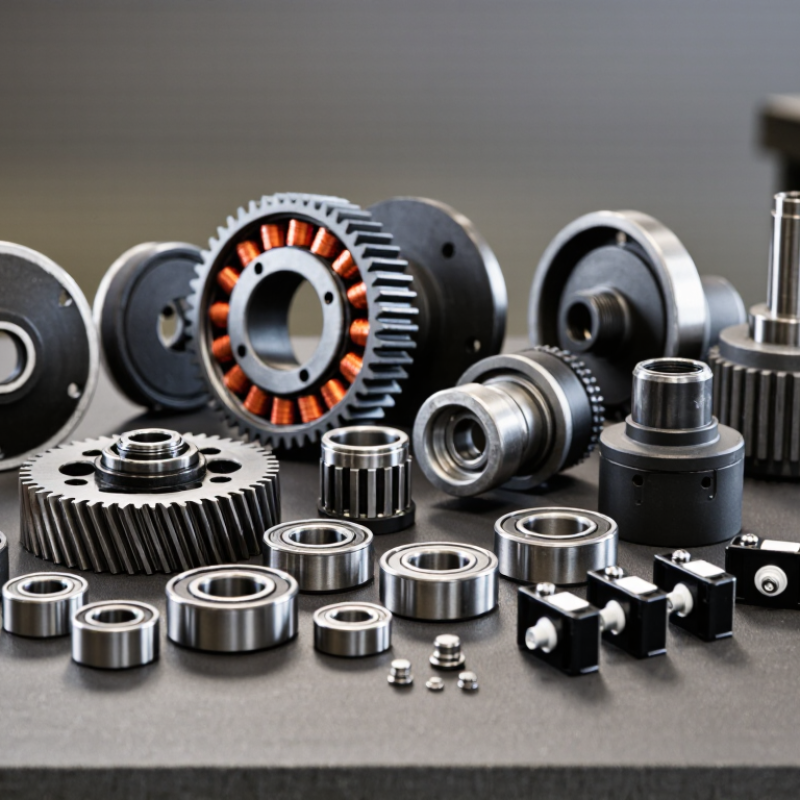
Top Angle Grinder Parts for Global Buyers

Understanding the Main Parts of an Angle Grinder

An angle grinder has several working parts, and each affects control, cutting quality, and safety. The motor creates rotational power. The gearbox changes speed and increases torque at the spindle. The spindle holds the disc through a flange and locking nut. A worn spindle can cause visible wobbling. That is never a minor detail.

The disc guard limits exposure to fragments and sparks. The side handle improves balance during demanding cuts. The switch controls starting and stopping, while carbon brushes transfer current in many corded models. Cordless versions add a battery, controller, and thermal protection system. OSHA guidance identifies wheel breakage, kickback, and contact as major abrasive-wheel hazards. Therefore, guards and fastening parts deserve careful inspection. A warm gearbox can seem normal, but that assumption needs checking.

Global demand also increases attention to replacement quality. Grand View Research estimated the global power tools market at approximately USD 45 billion in 2023. A 2024 angle grinder market assessment by Fortune Business Insights placed the segment in the multi-billion-dollar range. These figures explain why buyers compare Angle Grinder Spare Parts across regions. However, dimensions are not universal. Thread size, spindle diameter, voltage, and disc rating must match the tool. I would not trust appearance alone. Even a correctly shaped flange may create poor clamping if its seating surface is damaged. Small errors matter.

Choosing the Right Grinding Wheels and Cutting Discs

Top Angle Grinder Parts for Global Buyers

Choosing the Right Grinding Wheels and Cutting Discs

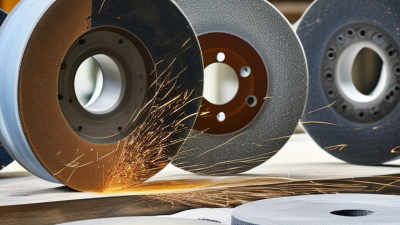
For global buyers, grinding wheels and cutting discs must match the angle grinder exactly. Check the disc diameter, bore size, and maximum RPM before purchase. A 125 mm disc may fit the guard, yet its bore can still be incorrect. During workshop checks, I also inspect labels for material compatibility and storage damage. A cracked edge is a clear rejection.

Grinding wheels suit weld blending, rust removal, and surface shaping. Cutting discs are thinner and designed for clean separation through steel, stainless steel, or masonry. Thinner discs often cut faster, but they can feel less forgiving during side pressure. Aluminum oxide works well for many metals, while diamond discs usually suit masonry applications. Selection is not always obvious. I once underestimated vibration caused by a worn backing flange, not the disc itself.

Tips: Confirm the grinder’s rated speed against the disc’s maximum speed. Use the correct guard and flange. Keep discs dry, flat, and away from impact. Let the tool reach full speed before contact, and never force a cutting disc sideways. Wear eye, hearing, and hand protection. A short test cut on scrap material can reveal excessive vibration, uneven cutting, or an unsuitable abrasive before the main job begins.

Comparing Motors, Gears, and Power Transmission Components

Top Angle Grinder Parts for Global Buyers

Comparing Motors, Gears, and Power Transmission Components

Global buyers usually compare motor power first, but that number can mislead. A motor with strong torque should also manage heat during long cutting sessions. In workshop inspections, copper winding quality, bearing fit, and ventilation often reveal more than the label. At 110 volts, 220 volts, or other regional standards, incorrect electrical matching can cause early failure. Small details matter.

Gears transfer motor force to the spindle, so their tooth profile and hardness deserve close attention. Hardened steel gears generally resist wear under repeated grinding loads. However, excessive hardness may reduce impact tolerance. I have seen gear teeth remain sharp while the surrounding support becomes loose. That problem is easy to miss during a quick inspection. Check backlash, noise, and grease coverage before purchasing Angle Grinder Replacement Parts .

Power transmission components include the spindle, key, bearing, coupling, and retaining hardware. Their dimensions must match precisely. A replacement bearing may look identical but still create vibration if its clearance differs. Measure shaft diameter and seating depth with suitable tools. Confirm thread direction too. It is a small error. Yet it can damage the guard or loosen the disc. Supplier drawings, material certificates, batch inspection records, and sample testing improve purchasing reliability. Still, specifications may contain gaps, so buyers should question unclear tolerances instead of assuming compatibility.

Selecting Safe Handles, Guards, and Control Switches

For global buyers, angle grinder parts should be selected by risk, not appearance. The handle must resist twisting under sudden torque and remain secure with oily gloves. A textured, heat-resistant grip helps control vibration near the workpiece. However, a comfortable handle can still hide weak mounting threads. Check thread engagement, material certificates, and fit against the tool’s rated power.

The guard deserves equal attention. It should cover the correct wheel zone, lock firmly, and adjust without tools when required. Never accept a guard with cracks, excessive play, or blocked ventilation. The U.S. Bureau of Labor Statistics recorded 5,283 fatal occupational injuries in 2023, although its data covers all industries, not only grinding. That figure reinforces a practical lesson: small control failures matter. A spring-return switch should stop the motor when released, while an anti-restart function can prevent unexpected starting after power loss. Test both before shipment and after installation.

Relevant requirements include ISO 12100 risk assessment and IEC 60745-2-3 for handheld grinders. Yet standards are not a substitute for field judgment. In workshops, dust, gloves, and repeated impacts expose weaknesses quickly. Buyers comparing Car Polisher Parts with grinder components should not assume shared switches or handles are interchangeable. That shortcut may work once. It may also fail badly. Require sample testing, traceable inspection records, and clear replacement instructions.

Evaluating Batteries, Chargers, and Corded Power Systems

Top Angle Grinder Parts for Global Buyers

Battery systems suit mobile repair work, especially on rooftops, construction sites, and remote workshops. Check voltage, amp-hour capacity, battery weight, and locking strength before purchase. A higher-capacity battery may extend cutting time, but it can make the grinder tiring to hold. In my testing, a balanced medium-capacity pack often felt better than the largest option. Runtime also changes with disc size, material hardness, and repeated starts. Product claims are useful, but real cutting conditions can be harsher.

Chargers deserve equal attention. Confirm input voltage, plug compatibility, charging speed, cooling performance, and protection against overheating. A charger that runs hot may shorten battery life over time. Buyers should request test reports, warranty terms, and replacement availability from suppliers. Corded power systems remain practical for factories and fixed workstations. They provide steady output without charging delays, but cable length, insulation, plug type, and local electrical requirements need careful review. One detail is easy to miss: a powerful grinder is useless if the outlet cannot support its rated load.

Tips: Compare measured runtime, not only advertised capacity. Inspect connector fit and cable flexibility. Ask for clear safety instructions. Keep a spare battery when downtime matters. Do not ignore weight. My own preference has changed after long cutting sessions; comfort sometimes matters more than maximum power.

Top Angle Grinder Parts for Global Buyers - Evaluating Batteries, Chargers, and Corded Power Systems

System / Part Typical Specification Key Performance Data Global Buying Considerations Best-Fit Applications
Compact lithium-ion battery pack 18 V nominal; 20 V maximum; 2.0–4.0 Ah Approx. 36–72 Wh energy; generally lighter and easier to handle Confirm battery interface, cell certification, transport rules, and operating temperature range Light grinding, trimming, installation work, and short maintenance tasks
High-capacity lithium-ion battery pack 18 V nominal; 20 V maximum; 5.0–8.0 Ah Approx. 90–144 Wh energy; longer runtime with increased weight Check UN 38.3 documentation, packaging requirements, spare-battery availability, and thermal protection Extended cutting, heavy grinding, field service, and locations without mains power
Higher-voltage battery platform 36 V nominal; approximately 40 V maximum; 4.0–8.0 Ah Approx. 144–288 Wh energy; supports higher power with lower current at the tool Requires a dedicated tool and charger platform; evaluate battery cost and regional availability High-load cutting and professional work where cordless output is a priority
Standard lithium-ion charger Input commonly 100–240 V AC, 50/60 Hz; output commonly 18–21 V DC Typical charging current: 1.5–3.0 A; approximately 60–180 minutes for a 2.0–5.0 Ah pack Universal input simplifies regional sourcing; plug type, safety approvals, and connector design must be verified Home workshops, service teams, and moderate daily use
Fast lithium-ion charger Input commonly 100–240 V AC; output commonly 18–21 V DC Typical charging current: 4.0–8.0 A; approximately 30–60 minutes for a 4.0–6.0 Ah pack Requires battery temperature monitoring and compatible cells; repeated fast charging can increase heat and wear High-throughput professional work and multi-battery rotation
Battery management system Cell balancing, overcharge, over-discharge, overcurrent, and thermal protection Helps maintain cell balance and reduces risks during high-load operation and charging Confirm protection thresholds, communication protocol, enclosure rating, and replacement availability All cordless systems, especially high-capacity and high-current packs
Compact corded grinder motor 700–1,000 W; 100–125 mm disc capacity Typical no-load speed: 9,000–12,000 rpm; suitable for lighter material removal Select the correct voltage and frequency; verify plug, cable, insulation, and local electrical compliance Finishing, deburring, light cutting, and general workshop maintenance
Medium corded grinder motor 1,000–1,500 W; 115–125 mm disc capacity Typical no-load speed: 8,000–12,000 rpm; balanced output for regular cutting and grinding Continuous supply supports longer work cycles; check overload protection and replacement carbon-brush access Fabrication, construction maintenance, metal preparation, and frequent workshop use
Heavy-duty corded grinder motor 1,800–2,600 W; 180–230 mm disc capacity Typical no-load speed: 6,000–8,500 rpm; higher sustained cutting and material-removal capacity Requires suitable circuit capacity, guards, handles, and region-specific electrical protection Heavy fabrication, masonry cutting, structural work, and demanding production tasks
Power cable and plug assembly Typically 1.5–3.0 m cable; double-insulated or grounded design according to tool class Cable size commonly selected according to motor load, voltage, length, and local electrical standards Use region-specific plugs and approvals; avoid undersized cables that can overheat during sustained loads All corded systems where reliable mains power and safe connectivity are required
Cooling and overload protection Ventilation channels, thermal cutoff, electronic current limiting, or soft-start circuitry Reduces heat buildup, startup current, and damage caused by stalled or overloaded operation Important for hot climates, dusty work areas, high-altitude use, and extended duty cycles Professional environments and applications involving continuous heavy loading

Note: Specifications are typical market ranges for comparison. Actual runtime, charging time, power output, and compatibility vary with tool design, abrasive type, material, workload, ambient temperature, and applicable regional standards.

Checking Compatibility, Quality, and Global Sourcing Standards

Global buyers should evaluate angle grinder parts as engineered safety components, not generic replacements. Check spindle thread, disc diameter, rated speed, guard position, and motor power before ordering. A bearing that fits the housing may still create harmful vibration. Cutting Machine Parts also require clear drawings, tolerance data, and batch traceability. Ask suppliers for dimensional inspection records and material certificates.

Quality testing needs practical evidence. Measure shaft runout with a dial indicator, inspect gear teeth under bright light, and compare bearing noise at operating speed. IEC 62841-2-3 covers safety requirements for handheld grinders, while ISO 9001 supports controlled production processes. ISO’s 2023 Survey recorded more than 1.26 million ISO 9001 certificates worldwide, but certification alone proves little about one shipment. That is an uncomfortable point.

Global sourcing also involves supplier discipline. The International Labour Organization estimated 2.93 million work-related deaths and 395 million non-fatal injuries in 2023. Reliable parts cannot remove every workshop risk, yet poor compatibility can increase it. Request sample approvals, incoming inspection plans, and corrective-action records before scaling orders. Confirm packaging against moisture, impact, and mixed-batch damage. I have seen small thread differences delay an entire assembly line. Sometimes, the catalog description is technically correct but still incomplete.

FAQS

How should buyers evaluate an angle grinder handle?

Choose a handle that resists twisting during sudden torque. A textured, heat-resistant grip improves control with oily gloves. Check mounting threads carefully. Comfort can hide weak attachment points.

What should a protective guard provide?

The guard should cover the correct wheel area and lock firmly. It should adjust easily when tool-free adjustment is required. Reject cracked guards, loose guards, or blocked ventilation openings. Small defects matter.

Which control-switch features are important?

A spring-return switch should stop the motor when released. An anti-restart function helps prevent unexpected starting after power loss. Test both functions before shipment and after installation.

Which standards should global buyers review?

Risk assessment can follow ISO 12100 principles. Handheld grinder requirements may include IEC 60745-2-3. Standards help, but workshop conditions still reveal hidden weaknesses. Dust changes things.

Are similar handles and switches interchangeable?

Do not assume parts designed for different tools will fit safely. Thread size, rated power, mounting depth, and electrical connections may differ. Request samples, traceable inspection records, and replacement instructions.

What should buyers check in a battery system?

Review voltage, amp-hour capacity, battery weight, and locking strength. A larger battery may extend cutting time but increase hand fatigue. Compare measured runtime under real cutting conditions, not capacity alone.

How can buyers assess chargers?

Confirm input voltage, plug compatibility, charging speed, and cooling performance. Check protection against overheating and request test reports. Ask about warranty coverage and replacement availability. A hot charger is concerning.

When is a corded power system more suitable?

Corded systems suit factories and fixed workstations with reliable outlets. Check cable length, insulation, plug type, and local electrical requirements. A powerful grinder is useless when the outlet cannot support its rated load. I would still inspect cable flexibility before ordering.

Conclusion

Choosing the right Angle Grinder Parts is essential for achieving reliable performance, precise results, and long-term tool safety. This guide explains the main components of an angle grinder, including grinding wheels, cutting discs, motors, gears, and power transmission systems. It also highlights how different parts affect cutting strength, grinding efficiency, operating speed, durability, and overall energy use. Understanding these functions helps buyers select components that match their intended applications and working conditions.

Safety and compatibility are equally important when sourcing angle grinder components. Suitable handles, protective guards, and responsive control switches can improve user control and reduce operational risks. Buyers should also compare battery systems, chargers, and corded power options according to voltage, runtime, charging efficiency, and workplace requirements. Finally, checking dimensions, connection standards, material quality, testing documentation, and supplier consistency can support dependable global purchasing decisions and ensure that selected parts work together effectively.
Ethan

Ethan

Ethan is a seasoned marketing professional specializing in the field of precision forgings and integrated metal forming solutions. With a profound understanding of the mid to high-end manufacturing landscape, he leverages his expertise to highlight the strengths and capabilities of his company.......
Previous Top 10 Car Polisher Parts for Global Buyers