Leave Your Message
0%

So, China’s auto refinishing market? It’s getting pretty technical these days—way more competitive, and honestly, a lot more focused on quality. That’s where Car Polishing Accessories really come into play, especially for workshops, distributors, and pro detailers.

So, according to S&P Global Mobility, the average age of light vehicles in the U.S. hit 12.6 years in 2024. And honestly, that makes sense—older cars tend to need things like paint correction, scratch removal, and general surface upkeep. Grand View Research also points to automotive aftermarket services as a pretty major global growth area. That said, market estimates don’t always line up from one report to the next. And that gap? Yeah, it’s worth a closer look.

So, this article takes a look at China’s top 10 Car Polishing Accessories manufacturers—and we’re judging them on things that actually matter in practice. That means stuff like how consistent their polishing pads are, whether their compounds play nice with different setups, machine performance, production capacity, quality control, export experience, and technical support. Sure, product photos can look great. But the real test? How things hold up under pressure, heat, and repeated use.

Mike Phillips—who's a well-known automotive detailing educator and the author of The Complete Guide to a Show Car Shine—puts it like this: "The goal of polishing paint is to remove a small amount of paint to level the surface." And honestly, that point matters a lot. If you go too aggressive with correction and don't keep your process under control, you can easily damage the clear coat.

Honestly, when we pick manufacturers, ads aren't the whole story. What really counts is their materials, how they test things, what customers say, and whether they're reliable after the sale. Sure, some suppliers might come in cheaper—but if the foam density is all over the place, you can end up with uneven results. And that's pretty easy to miss.

Still, it’s worth checking the latest certifications, factory data, and how samples actually perform before you buy. After all, manufacturing strengths can shift pretty quickly. So treat this ranking as a handy starting point—not some permanent, final verdict.
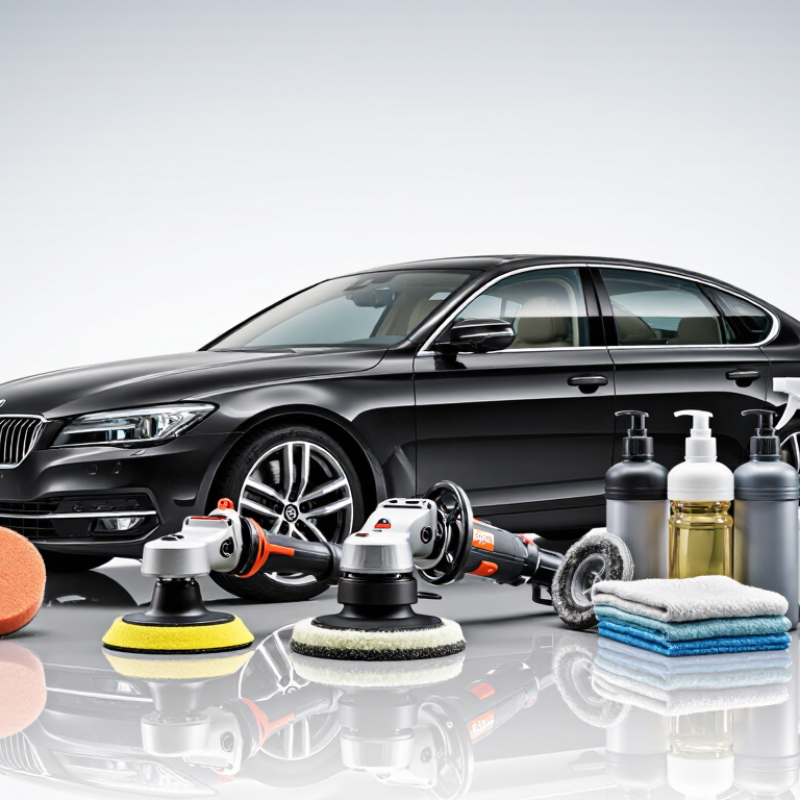
China Top 10 Car Polishing Accessories Manufacturers?

China’s Top 10 Car Polishing Accessories Manufacturers: Scope and Ranking Criteria

China’s Top 10 Car Polishing Accessories Manufacturers: Scope and Ranking Criteria

This guide examines China’s top ten manufacturers of car polishing accessories. The scope includes polishing pads, backing plates, foam discs, wool tools, adapters, and related Car Polisher Parts. It focuses on factories serving professional detailers, repair centers, distributors, and vehicle-care workshops. Private-label suppliers may qualify when they control production and quality checks.

The ranking uses measurable criteria. Manufacturing experience matters, but it cannot replace current evidence. We assess material consistency, cutting performance, heat resistance, dimensional accuracy, and batch stability. Sample testing includes checking pad density, stitching, hook-and-loop strength, and backing-plate runout. We also review production capacity, quality-management procedures, customization ability, delivery reliability, and technical support. Safety documentation and legal export compliance are essential. Clear product specifications improve trust.

Real evaluation is rarely perfect. Public factory data can be incomplete or outdated. A polished website proves little. We therefore compare samples, inspection records, customer feedback, and response quality. Trial orders can reveal uneven foam, weak adhesive, or inconsistent packaging. Price receives limited weight because cheaper parts may create more rework. Ranking positions can change when factories upgrade equipment, change materials, or lose process control. A supplier with strong machinery may still lack dependable after-sales communication. That weakness deserves attention.

Car Polishing Accessories Market: Growth, Demand, and Export Data

China’s car polishing accessories market is expanding with vehicle ownership, repair activity, and detailing demand. Workshops need faster correction, consistent finishes, and longer-lasting tools. Consumers are also buying compact polishing machines, foam pads, microfiber cloths, backing plates, and abrasive compounds. Demand is strongest where used-car sales and professional detailing services are growing.

Export data requires careful interpretation. Customs databases often combine polishing tools with broader automotive equipment categories. This can distort product comparisons. Still, recent shipment records show strong overseas demand from distributors, repair chains, and online sellers. Southeast Asia, Europe, the Middle East, and North America remain important destinations. Buyers usually compare unit price, pad durability, packaging quality, and delivery reliability.

A practical review of China’s top ten manufacturers should examine more than factory size. Production consistency matters. So do material traceability, batch testing, export experience, and after-sales communication. Product samples can reveal uneven foam density or weak hook-and-loop adhesion. Small defects become expensive during large orders. The market is growing, but growth is not perfectly uniform. Freight costs, exchange-rate changes, and changing vehicle paint systems still create uncertainty. Exporters that share test results, clear specifications, and realistic lead times appear more dependable to international buyers.

Key Product Categories: Pads, Compounds, Machines, and Abrasives

China’s top 10 car polishing accessories manufacturers are often evaluated by product consistency, testing standards, and production experience. The strongest suppliers usually offer complete systems, including polishing pads, compounds, machines, and abrasives. This matters because mismatched accessories can create uneven gloss, heat marks, or unnecessary paint removal.

Foam, wool, and microfiber pads serve different correction stages. Cutting compounds remove oxidation and deeper defects, while finishing compounds refine haze and light swirls.

Polishing machines should provide stable speed control, comfortable handling, and reliable heat management. Abrasives also need consistent grit distribution, especially when preparing panels before polishing.

In my experience, supplier samples reveal more than catalog claims. Check edge durability, dust levels, backing strength, and machine vibration during real panel testing. No manufacturer is perfect.

Tips: Test pads with the intended compound and machine. Record working time, surface temperature, and finish clarity. Ask for batch specifications and replacement parts before placing a large order. A cheaper accessory may cost more through rework. Small differences matter. Suppliers of Polishing Machine Accessories should also explain compatibility, storage conditions, and safe operating limits. Some product descriptions remain vague, so buyers should verify technical data rather than relying on attractive photographs.

ISO 9001, FEPA Grit, and Other Quality Standards in China

China’s top ten car polishing accessories manufacturers should be judged by documented quality, not catalog size. ISO’s 2023 Survey reported more than 1.4 million ISO 9001 certificates worldwide. This shows broad adoption, but certification alone cannot prove consistent polishing performance. Buyers should inspect certificate scope, audit dates, traceability records, and corrective-action reports.

FEPA grit standards help control abrasive particle size and grading accuracy. A 1,200-grit pad should not behave like an inconsistent 800-grit product. Reliable factories test abrasive distribution, backing strength, foam density, and heat resistance. They should also provide batch numbers and inspection results. The global abrasives market was valued at approximately USD 46 billion in 2023, according to Grand View Research. That scale increases pressure for measurable quality, especially in export production.

Practical testing remains essential. Run each pad on a painted panel, then check haze under direct lighting. Record cutting speed, surface temperature, and residue. Suppliers producing Drill Accessories may use similar inspection discipline, but car polishing tools need paint-safe control. Some factories provide excellent paperwork yet inconsistent foam hardness. That weakness deserves attention. I would request samples from three production batches before approving a long-term supplier. Mistakes happen, even with ISO systems. A careful buyer verifies performance repeatedly.

China Top 10 Car Polishing Accessories Manufacturers? - ISO 9001, FEPA Grit, and Other Quality Standards in China

Ranking Anonymous Manufacturer Profile Main Product Category Relevant Quality Standard FEPA Grit Applicability Quality Documents to Request Key Inspection Points
01 Manufacturer Profile 01 Foam polishing pads ISO 9001:2015 quality-management system; product specifications should be confirmed by the supplier. Usually not applicable Valid ISO certificate, technical data sheet, material declaration, batch records Density, hardness, pad thickness, flatness, hook-and-loop adhesion
02 Manufacturer Profile 02 Wool polishing pads ISO 9001:2015; fiber-material specifications and manufacturing controls should be verified. Not normally applicable Fiber composition, product specification, colorfastness or material test records Fiber density, pile height, backing strength, balance during rotation
03 Manufacturer Profile 03 Abrasive polishing discs ISO 9001:2015; coated-abrasive products may be evaluated against applicable FEPA and EN requirements. Applicable where abrasive grain is specified Abrasive-grain specification, grit-distribution report, safety data sheet, batch traceability Grit consistency, cutting performance, disc diameter, backing integrity
04 Manufacturer Profile 04 Microfiber polishing towels ISO 9001:2015; textile composition and care requirements should be documented. Not applicable Fiber-composition statement, GSM specification, colorfastness test, packaging specification Lint release, absorbency, edge stitching, dimensional tolerance
05 Manufacturer Profile 05 Backing plates and pad holders ISO 9001:2015; rotating-tool safety requirements should be reviewed for the intended speed and application. Not applicable Material certificate, dimensional drawing, maximum-speed declaration, balance test report Thread compatibility, run-out, balance, heat resistance, maximum operating speed
06 Manufacturer Profile 06 Diamond polishing pads ISO 9001:2015; abrasive-grain classification and safety documentation should be verified. Applicable when FEPA diamond grades are declared Diamond-grit grade, concentration or formulation data, SDS, batch certificate Grit uniformity, diamond retention, pad wear, surface-finish consistency
07 Manufacturer Profile 07 Polishing compounds and pastes ISO 9001:2015; chemical composition, labeling, and safety requirements must be checked for the target market. Only when abrasive grade is declared Safety data sheet, ingredient or material declaration, batch test report, shelf-life data Viscosity, abrasive concentration, residue, storage stability, batch consistency
08 Manufacturer Profile 08 Sanding discs and finishing sheets ISO 9001:2015; FEPA P-grit designation is relevant for coated abrasives when formally declared. Commonly applicable Grit designation, grain-distribution data, backing specification, product safety data Grit size, abrasive coverage, bond adhesion, dust extraction compatibility
09 Manufacturer Profile 09 Detailing brushes and cleaning accessories ISO 9001:2015; material safety and chemical-resistance data should match the intended vehicle surfaces. Not applicable Material declaration, dimensional specification, chemical-resistance test, packaging record Scratch risk, bristle retention, handle strength, resistance to cleaners
10 Manufacturer Profile 10 Complete polishing accessory sets ISO 9001:2015 for quality management; each component should be assessed against its own applicable requirements. Depends on the included abrasive products Component-level certificates, inspection plan, packing list, batch traceability, SDS where required Set completeness, compatibility, labeling, packaging quality, component consistency

Note: ISO 9001:2015 certifies a quality-management system rather than a specific product. FEPA grit designations describe abrasive grain sizes and are not, by themselves, a manufacturer certification. Supplier certificates, test reports, and current product specifications should be independently verified before purchasing.

Top 10 Chinese Manufacturers Compared by Capacity, Certifications, and Pricing

China’s top ten car polishing accessory manufacturers differ sharply in production capacity, certification coverage, and pricing discipline. Larger factories may produce 500,000 to 2 million polishing pads monthly, while smaller workshops focus on custom orders. Capacity alone can mislead. A factory with fewer machines may deliver better consistency.

The strongest suppliers usually maintain ISO 9001 quality systems and documented batch inspections. Some also provide ISO 14001, REACH, or RoHS-related compliance documents for export markets. Buyers should request recent audit reports, material declarations, and test samples. Look closely at foam density, pad diameter tolerance, microfiber weight, and compound stability. These details affect polishing speed and surface finish.

Pricing normally depends on material, packaging, order volume, and customization. Standard foam pads may range from 0.60 to 2.50 US dollars per piece under factory terms. Premium wool pads, microfiber towels, and polishing compounds cost more. The cheapest quote is rarely the safest choice. Ask for a sample before approving a large shipment. That step is basic.

A practical comparison should score monthly output, defect rates, certification validity, lead time, and after-sales response. Some manufacturers advertise impressive capacity but outsource key processes. That can create uneven color, stitching, or abrasive performance. I would treat every ranking as provisional. Factory conditions change, and public information is not always complete. A short video call helps, but an independent inspection remains more reliable.

OEM Services, Export Reach, and After-Sales Support: A Buyer’s Guide

China’s top ten car polishing accessory manufacturers should be judged beyond catalog size. OEM capability matters more. Ask for material certificates, production samples, and polishing-pad consistency records. In factory audits, I check pad density, backing adhesion, packaging strength, and batch labels. Small defects often become expensive claims.

Export reach also needs evidence. Grand View Research reports steady automotive aftermarket growth, with a projected compound annual growth rate of about 4.5% through 2030. This supports demand for polishing kits, Air Tool Accessories, microfiber products, and pneumatic tools. However, a supplier’s export history matters more than market growth. Request destination-country references, shipping records, and clear Incoterms. A polished website is not proof.

Tips: Test three production batches before signing a large OEM order. Compare cutting speed, heat buildup, dust retention, and finish quality. Ask whether the supplier can print private labels, adjust colors, and maintain the same foam density. After-sales support should include response times, replacement rules, spare-part availability, and technical videos. S&P Global Mobility reported that the average vehicle age in major markets continues to rise, creating long-term repair and refinishing demand. Still, forecasts are not guarantees. One weak shipment can damage a distributor’s reputation. Suppliers should disclose limitations instead of promising perfection.

Hexagonal Locking Nuts for Angle Grinders: A Guide to Polishing and Cutting Wheel Accessories

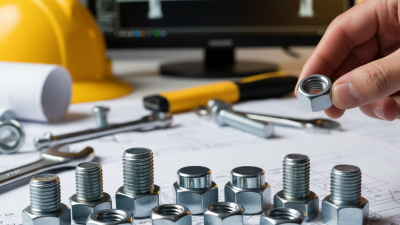
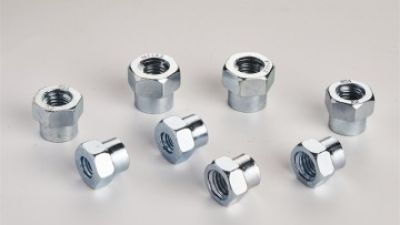
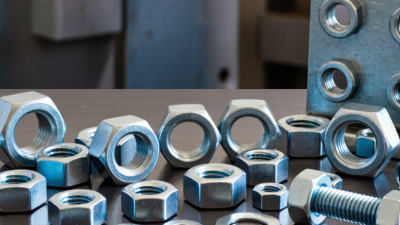
Hexagonal locking nuts are essential accessories for angle grinders and electric drill angle grinders, providing a secure connection between the tool spindle and a wide range of polishing and cutting wheels. Also known as pressure caps or fixing nuts, these components are designed with a six-sided profile that allows easy installation and removal with a suitable wrench. Their firm grip helps keep wire wheels, cutting discs, grinding discs, and polishing wheels properly positioned during regular workshop tasks.

A well-made locking nut supports stable accessory performance by maintaining consistent pressure on the wheel while the grinder is operating. The precise thread design should match the spindle specifications of the tool, helping reduce looseness and improving convenience when changing accessories. Whether used for metal polishing, surface preparation, edge trimming, or general cutting work, the correct hexagonal nut can make accessory replacement faster and more dependable.

Manufactured in China using advanced production techniques, these locking nuts are made from durable materials selected for repeated workshop use. Careful machining helps provide reliable threading, a firm fit, and resistance to ordinary wear. They are suitable for users seeking practical fixing hardware for angle grinder accessories, including wire wheels, cutting discs, and polishing wheels. Before installation, inspect the nut, spindle, and wheel for compatibility, and tighten the assembly according to the tool manufacturer’s instructions.

FAQS

What is driving demand for car polishing accessories in China?

Rising vehicle ownership, repair work, and detailing services are increasing demand. Used-car activity also supports sales.

Which products are commonly included in a polishing system?

Common products include foam pads, wool pads, microfiber pads, compounds, machines, backing plates, and abrasives. Compatibility matters.

How do polishing pads differ by material?

Foam pads suit different correction levels. Wool pads remove stronger defects. Microfiber pads can balance cutting and finishing.

What should buyers check before ordering samples?

Check foam density, edge strength, dust production, backing adhesion, and machine vibration. Test real panels.

How can buyers evaluate polishing compounds?

Test cutting power, working time, surface temperature, dust levels, and finish clarity. Results may vary between paint systems.

What does export data reveal about overseas demand?

Shipment records show demand from distributors, repair chains, and online sellers. Customs categories can combine different products.

Which details affect supplier reliability?

Buyers should review batch testing, material traceability, packaging, lead times, and after-sales communication. Factory size alone proves little.

Why can a cheaper accessory become more expensive?

Weak pads may wear quickly or create rework. A low purchase price can hide labor, waste, and replacement costs.

What information should buyers request before large orders?

Request technical specifications, batch records, replacement-part details, storage guidance, and operating limits. Clear answers matter.

What uncertainty remains in this market?

Freight costs, exchange rates, and changing paint systems can affect results. I may overvalue catalog claims without enough testing.

Conclusion

This article presents a practical overview of China’s leading Car Polishing Accessories manufacturers, focusing on the factors that matter most to international buyers. It examines market growth, demand trends, export activity, and the main product categories, including polishing pads, compounds, machines, and abrasive materials. It also explains how ISO 9001 certification, FEPA grit standards, production consistency, and quality-control systems can influence supplier reliability and product performance.

The comparison framework evaluates manufacturers according to production capacity, certification status, pricing, customization options, export experience, and after-sales support. Buyers will learn how to assess OEM and private-label services, confirm technical specifications, compare sample quality, and select suitable products for different polishing applications. By combining market insight with practical procurement criteria, this guide helps distributors, retailers, and professional users make more informed sourcing decisions while balancing performance, cost, delivery capability, and long-term supplier cooperation.
Lila

Lila

Lila is a seasoned marketing professional with a deep understanding of precision forging and integrated metal forming solutions. With a strong background in industrial research and manufacturing, she effectively communicates the technical advantages and unique selling points of her company’s......
Previous Top Rotary Tool Accessories Manufacturers in China