Leave Your Message
-
Phone
-
E-mail
-
Whatsapp
China has become a major sourcing center for Rotary Tool Accessories, serving hobbyists, workshops, contractors, and industrial buyers worldwide. Its manufacturers produce cutting discs, sanding drums, grinding stones, polishing wheels, drill bits, burrs, brushes, and multi-purpose kits. Product choice is broad. Quality, however, can vary sharply.
This guide introduces leading Chinese manufacturers through practical purchasing criteria, not exaggerated rankings. We examine manufacturing experience, material selection, production capacity, customization, packaging, and quality control. Reliable suppliers should explain abrasive grades, shank diameters, cutting performance, and expected service life. They should also provide clear product specifications and consistent samples.
Small details matter.
A well-made accessory should fit securely, run with limited vibration, and maintain its shape during normal use. Buyers should review inspection records, surface finish, balance testing, and batch consistency. For export orders, documentation and applicable safety requirements also deserve attention. Public certifications can support credibility, but they should be verified directly.
The companies discussed in this article are selected for their visible industry experience and ability to serve different purchasing needs. Some focus on high-volume standard products. Others compete through OEM development, private labeling, or specialized abrasives. No supplier is perfect. A factory may offer competitive pricing but need stronger communication. Another may provide excellent samples but have limited production capacity. That trade-off is easy to miss.
This introduction is not a substitute for supplier audits or application testing. It is a practical starting point for comparing Chinese manufacturers and choosing Rotary Tool Accessories with greater confidence.
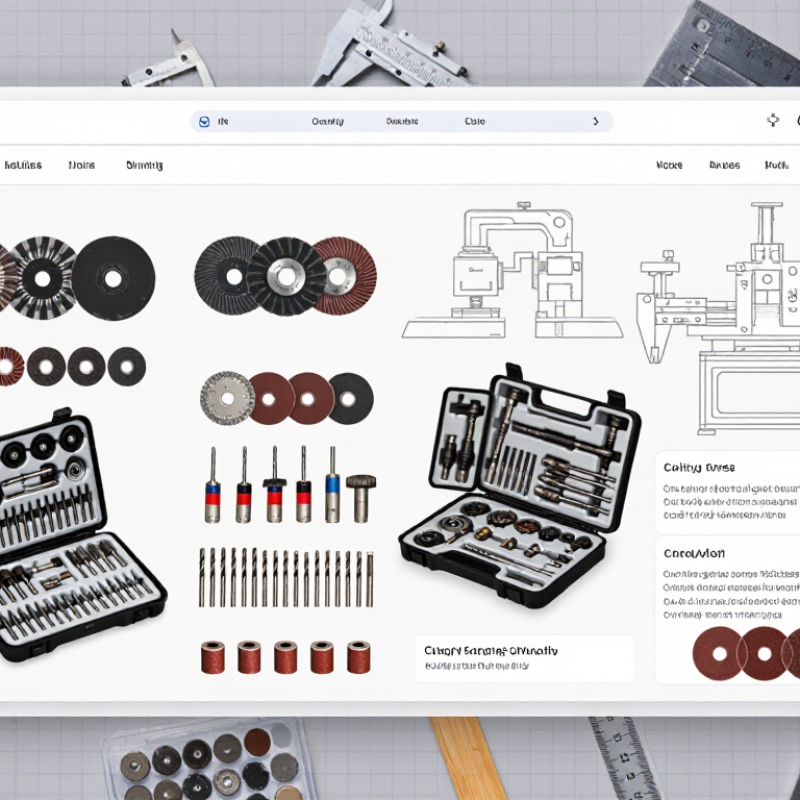
China’s rotary tool accessories industry combines machining, molding, coating, and assembly in dense manufacturing networks. Factories commonly produce cutting discs, sanding drums, mandrels, polishing wheels, burrs, and drill-style attachments. Materials include hardened steel, aluminum, carbide, resin, and abrasive grains. A practical supplier should explain material grades, tolerance ranges, and intended tool speed. Small details matter.
Production usually begins with CAD drawings and sample approval. CNC turning controls shank diameter, while stamping and molding support high-volume parts. Abrasive products need balanced bonding, consistent grit distribution, and careful curing. Quality teams often inspect dimensions, surface finish, runout, and packaging strength. For buyers, batch traceability and test records provide stronger evidence than attractive catalogs. Air Tool Accessories may share compatible abrasives, collets, and polishing systems, but pneumatic tools require correct pressure and speed data. Compatibility claims should be tested.
Experienced manufacturers can adjust packaging, labeling, and production schedules for different markets. They also help buyers select accessories for metalwork, woodworking, jewelry repair, or maintenance. However, supplier audits should include factory visits, sample comparisons, and checks on corrective actions. Early samples sometimes hide production variation. That deserves honest review. A reliable sourcing process leaves room for retesting, redesign, and rejecting inconsistent batches.
| Industry Dimension | Typical Data in China’s Manufacturing Sector | Manufacturing and Purchasing Relevance |
|---|---|---|
| Main Product Categories | Grinding stones, sanding drums, abrasive discs, cutting wheels, polishing wheels, wire brushes, drill bits, engraving cutters, burrs, mandrels, and collets | Manufacturers commonly combine standard accessory production with OEM packaging and customized geometry. |
| Common Shank Sizes | 1/8 inch (3.175 mm) and 1/4 inch (6.35 mm) are widely used; metric sizes such as 2.35 mm and 3.0 mm are also available. | Shank compatibility should be confirmed before ordering because collet size and tool design vary by market. |
| Abrasive Materials | Aluminum oxide, silicon carbide, diamond abrasive, ceramic abrasive, and emery are commonly used. | Material selection depends on the workpiece, required surface finish, cutting speed, and service life. |
| Metal Components | Carbon steel, stainless steel, alloy steel, brass, and aluminum are frequently used for shanks, mandrels, brushes, and cutting components. | Plating, heat treatment, balancing, and corrosion protection can affect durability and operating safety. |
| Non-Metal Components | Nylon, rubber, felt, plastic, resin, wood, and fiber materials are used in polishing, sanding, brushing, and backing components. | The component material influences flexibility, heat resistance, polishing performance, and compatibility with different surfaces. |
| Typical Application Materials | Wood, plastic, fiberglass, aluminum, copper, steel, stainless steel, ceramics, glass, and stone | Application-specific product selection helps control heat generation, clogging, chipping, and premature wear. |
| Manufacturing Capabilities | Stamping, CNC machining, injection molding, wire forming, abrasive bonding, electroplating, heat treatment, assembly, and automated packing | A broader in-house process range can shorten lead times and simplify quality control for customized orders. |
| Important Production Regions | Manufacturing activity is concentrated in industrial areas of Guangdong, Zhejiang, Jiangsu, Shandong, Fujian, and other established hardware and tool clusters. | Regional industrial ecosystems provide access to component suppliers, packaging services, tooling, and export logistics. |
| Quality-Control Checks | Visual inspection, dimensional checks, shank straightness, balance, abrasive adhesion, hardness, runout, and performance testing | Inspection requirements should be agreed in advance, especially for high-speed rotating accessories. |
| Compliance Requirements | Depending on the destination market, buyers may request RoHS, REACH, material declarations, safety documentation, and applicable abrasive-wheel testing records. | Compliance documentation should match the product type and importing country rather than being assumed for every accessory. |
| Customization Options | Custom grit, diameter, cutting profile, shank size, coating, color, set configuration, labeling, and packaging are commonly available. | Technical drawings, samples, packaging artwork, and agreed inspection standards are normally needed for custom production. |
| Packaging Formats | Blister packs, plastic boxes, cardboard sleeves, molded trays, polybags, multipiece kits, and export cartons | Packaging can be adapted for retail, industrial distribution, e-commerce, or bulk shipment requirements. |
| Typical Export Considerations | Product classification, carton dimensions, labeling language, country-of-origin marking, transport protection, and destination-market documentation | Clear specifications and shipment documents help reduce customs delays, damage claims, and compatibility disputes. |
Note: The figures and descriptions above represent common manufacturing practices and product specifications in China’s rotary tool accessories sector. Actual capabilities and requirements vary by product type and production facility.
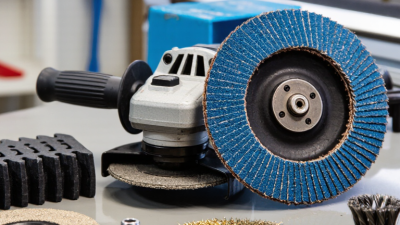
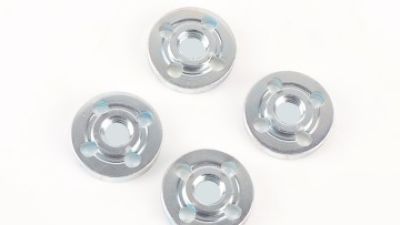
The Thickened Upper Pressing Plate 100-230 Type 9523 is a practical accessory for improving the stability and efficiency of angle grinders. Its four-hole quick-press design helps secure compatible grinding discs while allowing faster installation and removal than traditional fastening methods. Available in a 30 mm diameter with a 10 mm inner hole, or a 41 mm diameter with a 14 mm inner hole, it can support a wide range of grinder configurations.
Designed for grinding discs used with 100, 125, 150, 180, and 230 mm angle grinders, this pressing plate is also suitable for conversion rods used with angle grinders and electric drill angle grinders. The thickened construction provides dependable support during regular grinding tasks, while the carefully matched dimensions help improve compatibility across different tools. Manufactured in China, it is made for professional workshops, maintenance applications, and DIY projects that require a durable and convenient clamping accessory. Before use, operators should confirm the plate size, inner-hole diameter, spindle specifications, and disc compatibility, then install the accessory securely according to the tool’s instructions.
Common types include cutting discs, grinding stones, sanding drums, polishing wheels, drill bits, and engraving cutters. Each suits a different surface. Match the accessory carefully.
Cutting discs suit thin metal and plastic. Sanding drums shape wooden edges. Diamond points handle glass, ceramic, and masonry with controlled pressure. Never force the tool.
They support home repairs, automotive maintenance, furniture production, metal fabrication, and electrical installation. A small sanding drum can smooth a rough cabinet edge.
Check abrasive hardness, shank diameter, balance, heat resistance, and packaging protection. Test one sample first. Repeated-use testing is more revealing.
Buyers normally provide drawings, materials, dimensions, and performance targets. The manufacturer then prepares tooling and inspection plans. Details matter greatly.
They may change shank diameters, working lengths, grit sizes, coatings, colors, and carton labels. Custom parts should fit the buyer’s actual tool. Factory fixtures are not enough.
Request material specifications, inspection records, and sample-testing results. Check hardness, balance, runout, grit consistency, and backing adhesion. A polished factory tour proves little.
No. Confirm that certification covers the actual production site and product configuration. Review calibration logs, batch traceability, and corrective-action records. Documents can still miss problems.
Use identical accessories on the same tool and material. Record vibration, heat, cutting speed, wear, and service life. One sample can lie.
Wear safety glasses and suitable protective equipment. Follow the accessory’s speed rating and chuck requirements. Stop if vibration appears suddenly. Small warning, serious consequence.
China has become a major manufacturing base for Rotary Tool Accessories, supported by mature supply chains, advanced production equipment, and strong export capabilities. Chinese manufacturers commonly produce cutting discs, grinding wheels, sanding attachments, polishing tools, drill bits, engraving accessories, brushes, and other components for woodworking, metalworking, construction, automotive repair, crafts, and home maintenance. Their specialties often include high-volume production, material selection, precision processing, and flexible product development for different applications.
Reliable suppliers typically follow consistent manufacturing standards and apply quality control throughout material inspection, production, assembly, and final testing. Buyers can also benefit from OEM, ODM, private-label, packaging, and customized specification services. When evaluating a supplier, it is important to review product quality, certifications, production capacity, technical expertise, customization options, communication efficiency, lead times, pricing transparency, and after-sales support. A careful assessment helps buyers establish a stable partnership and obtain safe, durable, and application-appropriate Rotary Tool Accessories.