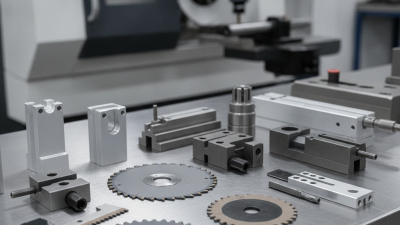
Let’s be honest—choosing a supplier for Power Tool Accessories in China isn’t just about who’s got the lowest quote. You can spend all day comparing prices, but out on real jobsites, what really matters is consistency, material traceability, and testing records that actually check out. A drill bit that wanders in hardwood, or a grinding disc that wears unevenly—those small frustrations can end up costing way more than the purchase order suggests. So yeah, the details matter. A lot.
So Grand View Research put the global power tools market at about $36.9 billion back in 2023, and they’re expecting it to grow at a 4.3% compound annual rate between 2024 and 2030. That number is just for power tools themselves, not the accessories. But still, it gives you a sense of how big this equipment market is—and why replacement or compatible accessories matter in practice. To be clear, that connection is more of an informed inference on our part than a separate accessories forecast.
Alright, so here’s the deal—when you’re sizing up Chinese suppliers, you really want to look beyond the sales pitch. Focus on their product range, how they handle manufacturing, their quality controls, and how much export experience they actually have. Don’t be shy about asking for specs, sample results, and proof that they do batch-level inspections—not just the odd one-off check. For cutting and drilling stuff, pay attention to dimensions, what materials they say they’re using, and the intended applications. And with abrasives, you’ll want to dig into the grit, bonding details, and whether the wear is consistent across batches. It’s also worth comparing lead times, packaging, how flexible they are on customization, and—maybe most importantly—how responsive their communication is. Look, supplier claims are helpful—don’t get me wrong—but they’re not exactly proof. You might get a sample that looks fantastic, then later batches are all over the place. That’s something worth keeping in mind. And honestly, this isn’t about crowning any one supplier “best” for everyone. It’s more about figuring out which supplier’s strengths actually line up with your products, your standards, and your order requirements.
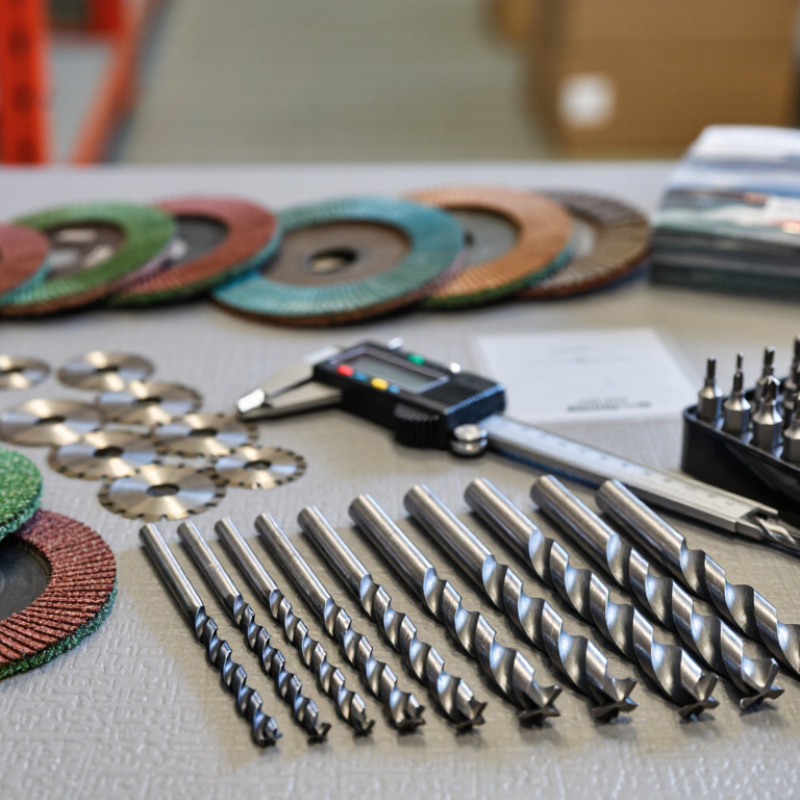
China’s power tool accessories industry spans cutting, drilling, grinding, and fastening products. Factories make drill bits, saw blades, abrasive discs, chucks, and polishing pads for different materials and workloads. Many suppliers work with nearby metalworking, heat-treatment, coating, and packaging businesses. This connected supply base can support varied specifications and production volumes.
Details matter.
Production quality depends on more than appearance. A drill bit may look clean yet wander in dense material. Buyers can ask about material grades, heat treatment, dimensional checks, and batch traceability.
For rotating accessories, balance and concentricity affect vibration and wear.
Fit comes first.
Sample testing in the intended tool and material can reveal issues that a catalogue cannot.
The supplier landscape includes specialized workshops and larger factories with broader testing capacity. Their strengths are not identical. Compare drawings, tolerances, packaging requirements, and realistic lead times before placing an order.
Ask how defects are recorded and corrected, not only whether inspection occurs.
Still, specifications can miss real job-site conditions, and sample results may not predict every batch.
That gap deserves attention. Good sourcing involves clear records, repeat checks, and honest discussion when performance falls short.
China-made power tool accessories span drilling, cutting, grinding, fastening, and surface finishing. Common products include high-speed steel and carbide-tipped drill bits, hole saws, saw blades, screwdriver bits, abrasive discs, sanding sheets, and polishing pads. Materials matter: a masonry bit needs a durable carbide tip, while a wood-cutting blade depends on tooth shape and spacing. Small details count.
For buyers, check dimensions, material specifications, coating, and fit with the intended tool. On sample inspection, look for uneven teeth, burrs, poor welds, and excessive runout; these can affect cutting accuracy and service life. Grand View Research valued the global power tools market at USD 36.8 billion in 2023 and forecast a 4.8% compound annual growth rate from 2024 to 2030. This is a tool-market figure, not an accessories-only estimate, but it signals broad demand for compatible consumables. A sample may perform well while later batches vary, so documented tolerances and repeat batch checks matter. I would not judge an accessory by appearance alone.
A supplier’s quality system should be visible on the factory floor, not just in a polished presentation. Ask for recent inspection records, material traceability, and defect data for comparable Air Tool Accessories. Check how workers measure shank dimensions, balance, and wear resistance. Request samples from routine production, not specially prepared samples.
The ISO Survey 2023 recorded more than 1.2 million ISO 9001 certificates worldwide. Certification shows a documented quality system, but it does not guarantee consistent product performance. Review the supplier’s corrective-action records and ask how it handles a failed batch. A useful audit follows one order from incoming steel to final packaging. Small details matter.
Capacity needs evidence, too. Ask for monthly output by product type, current machine utilization, staffing by shift, and lead times during peak demand. Deloitte’s 2024 manufacturing outlook reported that 86% of surveyed manufacturers saw smart manufacturing as a key future competitiveness driver. Yet a digital dashboard cannot replace an honest capacity check. Compare stated output with production schedules and shipment history. I would also ask what happens when a key machine stops; vague answers deserve a second look.
For buyers comparing China-based power tool accessory suppliers, safety evidence deserves as much attention as price and sample quality. Ask which standards apply to each item and destination market; requirements can differ for cutting discs, drill bits, and Rotary Tool Accessories. A supplier should identify the relevant standard, provide current test reports, and show that the report covers the exact product model. A quality-management certificate can support confidence in factory processes, but it does not prove that an accessory itself is safe.
Check the marked maximum speed, compatible tool type, material details, and batch identification. These details should match the product documents and packaging. Ask whether testing includes dimensions, balance, strength, or heat performance where relevant. Request reports from a competent, preferably accredited laboratory, then verify the laboratory, report date, and model number. Ask for a sample and inspect its finish, fit, and markings before placing a large order. Small inconsistencies matter. A certificate is only useful when its scope is clear, and paperwork can become outdated. I would also ask how the supplier handles design changes and defective batches; this question is easy to overlook, even by experienced buyers.
When comparing China-based power tool accessory suppliers, request a line-item quote rather than a single unit price. Ask whether it includes packaging, sample fees, tooling, and shipping to your destination. Unit costs often fall as order quantities rise, but the savings may not justify excess stock. Hardware Tool Accessories can vary widely in material, fit, and finish, so compare specifications alongside price. Small batches cost more.
For customization, describe the changes clearly: dimensions, materials, surface finish, package design, or printed labels. Request a sample and confirm which details can be reproduced in bulk. A custom color may require a larger run, while a small packaging change may be easier. Confirm sample charges, revision limits, and production lead time in writing. Samples reveal issues, sometimes late.
Minimum order quantities depend on the product and production setup. Ask whether the MOQ applies per item, size, or customized version. If the first order is modest, discuss a mixed-item order or standard packaging before negotiating a lower quantity. Check inspection procedures and how defects are handled. A low quote is not enough. I would also compare the supplier’s answers for consistency; vague details can make a cheaper offer difficult to assess.
When sourcing Drill Accessories from China, verify the supplier before comparing prices. Request its business registration details, factory address, and a live video tour of the production area. Ask which operations are done in-house and which are subcontracted. A polished showroom proves little.
Request samples made with the same materials and process planned for bulk orders. Check fit, balance, finish, and packaging under ordinary working conditions. For a drill bit, for example, inspect the shank and cutting edges closely. Ask for written specifications, inspection records, and clear defect-handling terms. Certificates can help, but verify their issuer and scope rather than relying on a logo in a file. Small details matter.
Before placing a large order, confirm the production schedule, carton markings, and inspection points in writing. Agree on how samples and finished goods will be checked, and consider an independent pre-shipment inspection. Keep dated photos and notes for comparison. A good sample can still hide inconsistent batch quality; this is easy to overlook when deadlines are tight. I would also test how clearly the supplier answers practical questions. Slow or vague replies are not proof of poor quality, but they deserve a second look.
China Best Power Tool Accessories Suppliers? Shipping, Warranty, and After-Sales Support Options
A strong supplier is measured by more than product range. Shipping details matter when a workshop needs replacement discs before a job starts. Ask for dispatch times, carton dimensions, tracking availability, and a clear process for reporting damaged goods. The World Bank’s 2023 Logistics Performance Index assesses 139 economies across six areas, including tracking and tracing, and timeliness. Use those same areas to compare suppliers, rather than relying on a vague “fast shipping” promise. Delays happen.
Warranty terms deserve equal attention. Request written coverage for defects, the claim period, required evidence, and who pays return freight. Clarify whether support can identify a faulty batch from its lot number. Good after-sales teams answer technical questions with specific product details, not copied replies. Response-time commitments should be realistic and documented. A polished catalogue is not proof of dependable service; I would test support with a practical question before placing a large order.
Tips: Ask for a sample shipment and track it yourself. Save the warranty document and support contact before ordering. Check whether replacement parts can ship separately. Small details matter. A supplier’s answer may still be imperfect, so compare it with actual delivery records and claim handling before committing to repeat orders.
| Supplier Option | Typical Products | Shipping Options and Indicative Transit | Warranty Terms to Confirm | After-Sales Support to Request | Best Fit |
|---|---|---|---|---|---|
| Factory-direct manufacturer | Drill bits, saw blades, abrasive discs, cutting wheels, and other production-run accessories | Courier for samples: usually about 3–7 business days; air freight: about 5–10 business days; sea freight: commonly about 25–40 days port to port | Ask for the written warranty period, coverage exclusions, claim evidence requirements, and whether replacement parts or credit are offered. Terms are normally contract-specific. | Request a named contact, defect-reporting process, response-time target, and batch traceability documents. | Repeat orders, custom specifications, and buyers able to meet minimum order quantities |
| Export-focused supplier | Common accessory ranges supplied in export packaging, with options for mixed orders | Courier, air, or sea freight may be available. Transit depends on destination, carrier, customs clearance, and shipment schedule. | Confirm whether warranty support is handled directly or through the seller, and who pays freight for approved claims. | Request export documents, shipment tracking, packing-list accuracy checks, and support in the buyer’s time zone. | Importers seeking coordinated documentation and international shipping support |
| Trading and sourcing supplier | Mixed categories sourced from multiple production facilities | Consolidated air or sea shipments can reduce the need to coordinate several suppliers; consolidation may add handling time. | Clarify which party is responsible for warranty claims and whether terms differ by product or production source. | Ask for one accountable contact, supplier-level defect records, and written procedures for inspection and returns. | Buyers combining smaller quantities or several accessory categories |
| Custom or private-label supplier | Accessories made to agreed dimensions, packaging, labeling, or performance specifications | Allow time for sample approval and production before dispatch. Transit time is additional and depends on the chosen shipping method. | Define acceptance criteria, inspection method, warranty start date, and remedies for products that fail agreed specifications. | Request pre-production samples, approval records, change-control procedures, and a documented corrective-action process. | Brands, distributors, or professional buyers requiring customized products |
| Small-order wholesaler | Standard accessories available from stocked inventory, subject to current availability | Courier is commonly practical for smaller shipments. Confirm dispatch lead time separately from carrier transit time. | Check the written return window, exclusions for wear or misuse, and the process for reporting transit damage. | Request stock confirmation, clear return instructions, and support contact details before payment. | Trial orders, replacement purchases, and buyers testing product quality before scaling |
Note: Transit times are indicative planning ranges, not delivery guarantees. Actual schedules depend on destination, carrier, customs clearance, product availability, and shipping terms. Warranty coverage and after-sales services are not standardized; obtain all terms in writing before placing an order.
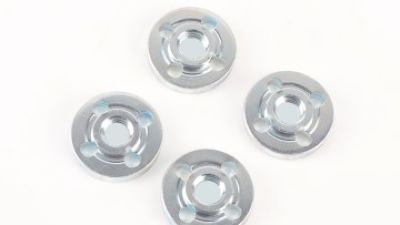
Choosing a thickened upper pressing plate for a 100–230 mm angle grinder starts with checking the grinder’s spindle and conversion rod dimensions. The plate’s center hole must fit securely, while its outer diameter should suit the grinding setup. A mismatch can cause poor seating or instability, so confirm measurements before selecting an accessory. Also consider the grinder size: a plate intended for a smaller tool may not be suitable for a larger model.
Our four-hole quick press plate is available with a 30 mm outer diameter and 10 mm inner hole, or a 41 mm outer diameter and 14 mm inner hole. Compare these specifications with your tool and the parts used for installation. Its four-hole design supports convenient fastening for fixed grinding tasks, while the thickened construction is intended to provide a sturdy contact surface during use.
Made in China, this universal core accessory is designed for compatibility with angle grinders measuring 100, 125, 150, 180, and 230 mm, as well as many electric drill angle-grinder setups using compatible conversion rods. Check the rod and plate dimensions for a secure fit before operating the grinder, and use the configuration specified for your tool.
Ask for itemized costs covering packaging, samples, tooling, and shipping. A single unit price hides useful details.
Compare materials, fit, and finish alongside unit costs. Larger orders may reduce prices, but excess stock can erase the savings.
Specify dimensions, materials, surface finish, packaging, and printed labels. Confirm which details can be repeated in bulk.
Check the sample against your written specifications before approving production. Samples reveal issues, sometimes late.
Ask whether the minimum applies per item, size, or customized version. Mixed items or standard packaging may suit a modest first order.
Request registration details, a factory address, and a live video tour. Ask which production steps happen in-house and which are subcontracted.
Check fit, balance, finish, and packaging under ordinary working conditions. For a drill bit, look closely at its shank and cutting edges.
Put the production schedule, carton markings, inspection points, and defect-handling terms in writing. Dated photos help compare samples with finished goods. A good sample can still hide batch inconsistencies; I might overlook them when rushed.
China’s power tool accessories industry offers a broad range of products, including drill bits, saw blades, grinding wheels, sanding discs, and cutting tools. When comparing suppliers, buyers should look beyond price and assess product consistency, material selection, manufacturing equipment, quality-control procedures, and the supplier’s ability to meet production volumes. Relevant certifications and documented safety testing can help confirm that products meet the requirements of their intended markets.
Before placing an order, clarify pricing, customization options, packaging, and minimum order quantities. Verify supplier information, request samples, and discuss specifications and inspection arrangements in writing. Also compare shipping methods, delivery schedules, warranty terms, and after-sales support. A careful sourcing process helps buyers select dependable Power Tool Accessories suppliers and build a clearer understanding of product quality, costs, and service expectations.