Leave Your Message
0%

So, when you're picking out hardware tool accessories, the real starting point isn't the fancy label on the package—it's the actual job you're tackling. Take drill bits for porcelain, for instance. They've got to handle serious heat and hold their edge, no question. And sockets? They need to fit snugly, take a beating from repeated torque, and still be easy to spot in a messy toolbox. Honestly, it's those tiny details that end up making the biggest difference.

Clint DeBoer, the guy who runs Pro Tool Reviews, once said something that really sticks with you: “The best accessory is the one that matches the tool, the material, and the task.” Sounds pretty straightforward, right? But honestly, putting that into practice isn't always a walk in the park. You see, pros tend to obsess over things like steel grade, coating, shank design, vibration control, and even warranty support. Meanwhile, your average homeowner might care more about storage, price, and how versatile the thing is. Neither approach is inherently wrong—it just depends on what you're after.

Honestly, the best pick really depends on what you're dealing with on the job. Like, if you're using a masonry bit on concrete, you're gonna face dust, friction, and those sudden impacts — it's rough. On the flip side, a circular saw blade cutting hardwood needs clean teeth and steady tracking, or it'll just wander off. In both cases, cheap or mismatched accessories can waste your time and even mess up your materials. And that risk? People tend to brush it off way too easily.

So, this guide dives into the whole world of Hardware Tool Accessories, checking out stuff like performance, how long they last, whether they actually fit your gear, and what it's like to use them day in, day out. And hey, we're not just talking theory—we get into the nitty-gritty, like trying to swap out a blade when your hands are covered in sawdust, or watching a stray bit skitter across the workshop floor like it's on a mission. Now, some picks here are pretty straightforward—no debate. But others? Yeah, they're up for discussion, and honestly, that's a good thing. Tool selection isn't some perfect science, you know? Even pros sometimes go for the quick fix over the long-haul quality, just because it's easier right now. So take what works for you, and don't stress about the rest. You know, the best decisions aren't just guesses—they come from actually trying things out, weighing your options side by side, and then being honest with yourself once it's all said and done.
What Is the Best Type of Hardware Tool Accessories?

Defining Hardware Tool Accessories and Their Main Categories

What Is the Best Type of Hardware Tool Accessories?

Defining Hardware Tool Accessories and Their Main Categories

Hardware tool accessories are replaceable parts that extend a tool’s function. They include drill bits, cutting discs, sanding pads, sockets, blades, clamps, and measuring attachments. The tool provides power. The accessory performs the contact work.

Main categories are shaped by the task. Drilling accessories create holes in wood, metal, masonry, or plastic. Driving accessories transfer force through bits, sockets, and adapters. Cutting accessories use toothed, abrasive, or shearing edges. Sanding and polishing accessories remove roughness or improve a surface. Air Tool Accessories belong to a separate operating group because compressed air powers them instead of an electric motor.

Compatibility requires more than matching size. Check the shank, thread, diameter, speed rating, material, and connection type. A socket may fit a fastener but fail under excessive torque. A disc may look suitable yet require a lower operating speed. I once chose an accessory by appearance alone. The result was poor control and uneven wear. That mistake still matters. Reliable selection combines manufacturer specifications, visible inspection, and the actual workpiece. Replace cracked, warped, blunt, or overheated accessories before use. Small details often decide whether a tool feels controlled or dangerous.

Comparing Accessory Types by Function, Material, and Durability

Choosing hardware tool accessories starts with function, not appearance. In workshop use, a socket set serves fastening, while cutting discs, drill bits, and sanding pads shape or remove material. I match each accessory to the task, workpiece, and tool speed. A masonry bit can struggle in steel. A wood blade may burn when pushed through dense board. That mismatch wastes time and can damage the surface. Check the size, fitting, and rated speed before use.

Material affects cutting feel, heat control, and service life. High-speed steel bits suit routine metal drilling and tolerate moderate heat. Carbide edges stay sharp longer against abrasive surfaces, but they can chip after side impact. Carbon steel accessories cost less and work well for light wood tasks. Coated surfaces may reduce friction, yet coating alone does not guarantee durability. I have seen a sharp-looking bit fail early because pressure was uneven. Technique matters too.

Durability depends on load, storage, and maintenance. An accessory used continuously needs stronger construction than one used for occasional repairs. Look for clean welds, even teeth, secure shanks, and no surface cracks. Keep bits dry, remove dust, and avoid forcing a dull edge. I sometimes replace accessories too late. That is an expensive lesson. Judge performance by consistent results, not purchase price. A durable accessory feels stable, cuts cleanly, and remains predictable after repeated work.

What Is the Best Type of Hardware Tool Accessories? — Comparing Accessory Types by Function, Material, and Durability
Accessory Type Primary Function Common Working Materials Typical Base Material or Cutting Medium Best Performance Advantage Relative Durability* Main Wear or Failure Factor Best Choice When...
Twist Drill Bits Creating round holes in metal, wood, and plastic Non-ferrous metal, mild steel, hardwood, softwood, and plastic High-speed steel; some versions use a cobalt-alloy steel for improved heat resistance Versatile drilling across many general-purpose applications Medium to high Excessive heat, incorrect speed, blunt cutting edges, and poor chip removal You need a general-purpose bit set for common workshop and maintenance tasks
Masonry Drill Bits Drilling holes in brick, concrete, block, and stone Unreinforced masonry and concrete, depending on the tool and bit design Steel body with a brazed or embedded carbide cutting tip Resists abrasive mineral surfaces better than ordinary metal bits Medium to high Carbide tip wear, overheating, impact damage, and drilling reinforced material without a suitable bit You need clean anchor or fastener holes in masonry using a compatible drill mode
Driver Bits Driving and removing screws and fasteners Wood, drywall, sheet metal, plastics, and general assembly materials Heat-treated alloy steel; impact-rated versions use tougher steel and torsion zones Fast installation and broad compatibility with screw-drive profiles Medium Cam-out, torsional shock, excessive torque, corrosion, and using the wrong tip profile You need efficient fastening and can match the bit precisely to the screw head
Hole Saws Cutting large-diameter circular openings Wood, plastic, thin metal, and composite sheet materials Bi-metal toothed construction, carbide-grit edge, or carbide-tipped teeth Produces large holes with less material removal than a solid drill of the same diameter Medium to high Tooth dulling, heat buildup, side loading, and cutting materials outside the intended range You need openings for pipes, cables, fittings, or hardware installation
Jigsaw Blades Making straight, curved, or plunge cuts Wood, laminate, plastic, aluminum, and thin steel High-speed steel, carbon steel, bi-metal, or carbide-grit construction Flexible cutting patterns and good access in sheet or panel materials Low to medium Tooth wear, blade bending, excessive feed pressure, and vibration You need curved cuts or controlled openings in sheet and panel materials
Circular Saw Blades Making long, straight cuts in stock materials Softwood, hardwood, plywood, laminates, plastics, and some non-ferrous metals Hardened steel body with high-speed-steel or carbide-tipped teeth Fast, repeatable cuts with tooth count selected for speed or finish quality High Tooth impact, resin buildup, overheating, incorrect blade alignment, and unsuitable tooth geometry You need high cutting speed and consistent straight cuts in sheet or dimensional stock
Abrasive Grinding and Cutting Discs Grinding, cutting, deburring, and surface preparation Carbon steel, stainless steel, cast iron, masonry, and other mineral surfaces Aluminum oxide, silicon carbide, zirconia, or diamond abrasive bonded in a reinforced disc Rapid material removal and surface preparation without a toothed cutting edge Medium Abrasive consumption, moisture, side loading, overheating, and exceeding the rated speed You need fast stock removal or cutting and can follow disc safety and speed requirements
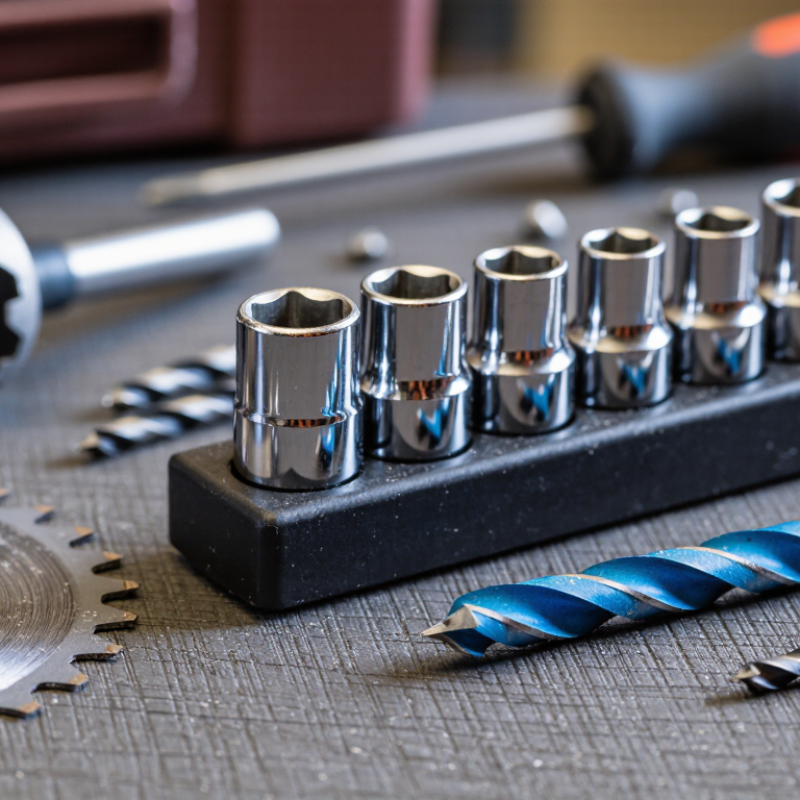
Socket and Nut-Driver Accessories Installing and removing hexagonal nuts and bolts Automotive components, machinery, structural fasteners, and general hardware Chrome-vanadium steel for hand use; tougher impact-grade alloy steel for impact tools High contact area and efficient torque transfer on correctly sized fasteners High Over-torquing, incorrect size, corrosion, rounded fasteners, and using hand sockets on impact tools You need repeatable torque transfer and reliable access to hex fasteners
Router Bits Profiling, grooving, trimming, and edge shaping Solid wood, plywood, MDF, laminates, and some plastics High-speed steel or carbide-tipped cutting edges mounted on a steel body Produces precise decorative profiles and clean routed joints High Resin buildup, improper feed direction, vibration, impact with hidden metal, and excessive heat You need repeatable edge profiles, grooves, or joinery in wood-based materials
Diamond-Grit Blades and Core Bits Cutting or coring hard, abrasive materials Concrete, porcelain tile, ceramic tile, brick, stone, and masonry Steel body with diamond segments or a continuous diamond-grit rim Excellent wear resistance and cutting ability on mineral-based materials Very high Segment loss, overheating, insufficient cooling, vibration, and using the wrong bond for the material You need controlled cutting or drilling in hard, abrasive mineral surfaces
Selection note: The best accessory depends on the material, tool compatibility, operating speed, cutting or fastening load, and required finish. Durability ratings are relative and assume correct use, suitable speed, proper alignment, and appropriate cooling or lubrication where required.

Matching Accessories to Common Tools and Work Applications

Choosing the best hardware accessory starts with the tool and the work material. A drill used on softwood needs different bits than one used on tile or stainless steel. I check the tool’s chuck size, speed range, and maximum torque before buying anything. A poorly matched accessory can wobble, overheat, or damage the work surface.

Power Tool Accessories should match the application, not just the tool name. For drilling wood, brad-point bits make cleaner entry holes. Masonry work requires carbide-tipped bits and steady pressure. For driving screws, magnetic bit holders improve control, especially in narrow cabinet corners. An impact driver needs impact-rated bits because ordinary bits may twist or snap under sudden force.

Cutting and sanding also demand careful pairing. A jigsaw needs a blade suited to the material and cut direction. Fine-tooth blades reduce splintering in laminated panels. For metal, I use cutting discs with the correct diameter and speed rating. Sanding discs should fit the backing pad exactly. Small gaps can cause uneven wear. I have occasionally chosen a convenient accessory instead of the correct one, and the finish suffered. That mistake is worth remembering. Check the accessory for cracks, dull edges, and heat marks before every job. Wear suitable eye protection, secure the workpiece, and let the tool do the cutting.

What Is the Best Type of Hardware Tool Accessory?

Matching accessories to common tools and work applications helps improve cutting, drilling, fastening, and surface-finishing results.

The chart shows a practical suitability score from 1 to 10 for frequently used accessory and tool combinations. Higher scores indicate a stronger general-purpose match for the listed application; actual performance also depends on material, accessory quality, speed, and operator technique.

Evaluating Compatibility, Safety, and Ease of Use

Choosing hardware tool accessories starts with compatibility, not appearance. Check the tool’s voltage, shaft size, thread pattern, and rated speed. Rotary Tool Accessories should match the manufacturer’s specifications exactly. A loose cutting disc can wobble within seconds. A poorly fitted sanding drum may overheat the material. Grand View Research valued the global power tools market at approximately USD 39.6 billion in 2023, showing how widely these systems are used. However, market growth does not guarantee universal accessory compatibility.

Safety deserves practical attention. OSHA estimates that roughly 2,000 workplace eye injuries require medical treatment each day. Safety glasses, guards, and controlled pressure are essential, even during small household repairs. Inspect accessories for cracks, bent shafts, or missing teeth before use. ISO 12100 also emphasizes risk reduction through proper design and user control. I have found that users often trust a new-looking accessory too quickly. That assumption needs reconsideration.

Tips: Match the accessory’s maximum speed with the tool’s setting. Unplug corded tools before changing attachments. Keep both hands stable when starting. Test on scrap material first. For dusty work, use suitable ventilation and respiratory protection. Ease of use also matters: clear markings, quick changes, and balanced weight reduce mistakes. A cheaper accessory can become expensive when it slips, breaks, or damages the workpiece.

Choosing Accessories for Professional, Household, and DIY Needs

Choosing hardware tool accessories depends on the job, user, and working environment. Professional tradespeople usually need durable bits, abrasive wheels, cutting discs, and organized storage. A 2024 Grand View Research report projects the global power tools market to grow at about 8% annually through 2030. That growth reflects wider tool use, but it does not make every accessory suitable. For daily work, check material compatibility, heat resistance, load ratings, and replacement availability. Grinder Hardware should match the grinder’s diameter, spindle, speed rating, and intended surface.

Household users need simpler choices. A compact drill-bit set, sanding sheets, driver bits, and protective eyewear can handle shelves, furniture, and light repairs. The U.S. Consumer Product Safety Commission reports thousands of emergency-room visits each year involving power tools and workshop equipment. Small mistakes matter. A loose disc can become dangerous within seconds. Read the manual, inspect damaged accessories, and keep both hands away from moving parts. Short jobs still need care.

DIY users often buy large mixed kits, then leave half the pieces untouched. I have made that mistake myself. A smaller, task-based set is usually easier to control. Choose accessories after measuring the screw head, wall material, timber hardness, or metal thickness. The 2023 Houzz & Home Study showed continued homeowner spending on renovation projects, yet many projects remain self-managed. That creates a practical gap between enthusiasm and skill. Test an accessory on scrap material first. It may cut too aggressively, wear quickly, or simply be the wrong tool.

Balancing Performance, Cost, Maintenance, and Service Life

What Is the Best Type of Hardware Tool Accessories?
Balancing Performance, Cost, Maintenance, and Service Life

The best hardware accessory is not always the strongest or most expensive option. It should match the tool, material, workload, and working environment. For example, a drill bit used on masonry needs heat resistance and a stable cutting edge. A bit used on soft wood may need sharper geometry instead. Choosing by application prevents wasted money and uneven results.

Performance matters, but maintenance affects real value. Clean accessories after use, remove dust from grooves, and store them away from moisture. A small amount of corrosion can increase friction and reduce accuracy. Inspect cutting edges, sockets, and connection points before demanding work. Replace damaged parts early. This is safer and often cheaper than repairing a tool later.

Service life also depends on technique. Excessive pressure can overheat an accessory, even when its material is high quality. I have seen users blame the accessory after forcing it through a hard surface. Sometimes the operator is the weak link. That is worth admitting. In regular workshop use, a moderately priced accessory with careful handling may outlast a premium one used carelessly. Check technical specifications, but test real performance under controlled conditions. Cost per use is more meaningful than the purchase price. Short-term savings can become long-term waste.

China Suppliers’ Guide to Factory Hexagonal Locking Nuts for Angle Grinders and Electric Drill Accessories

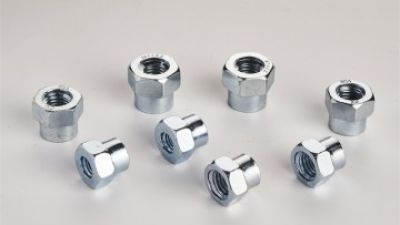
China’s factory-made hexagonal locking nuts are essential accessories for angle grinders and electric drill angle grinders. Also called pressure caps or fixing nuts, these fasteners secure the tool spindle to wire wheels, cutting discs, grinding wheels, and polishing pads. Their hexagonal profile allows controlled tightening with a suitable wrench, while accurate threading helps reduce wobble, vibration, and disc slippage during operation. For distributors and equipment manufacturers, choosing a factory supplier with stable machining, consistent dimensions, and corrosion-resistant finishing is critical to maintaining dependable tool performance.

Market demand supports the importance of reliable accessory components. Grand View Research estimates that the global power tools market was valued at more than US$36 billion in 2023 and is expected to expand steadily through 2030, driven by construction, manufacturing, maintenance, and home-improvement applications. As tool usage increases, suppliers are placing greater emphasis on replacement parts that provide compatibility and long service life. Chinese factories can support this demand through scalable production, material selection, thread inspection, and batch-based quality control.

When sourcing locking nuts, buyers should confirm spindle specifications, thread direction, outer diameter, thickness, and compatibility with common disc sizes. High-quality nuts should resist deformation under repeated tightening and remain secure under rotational load. Packaging that separates specifications and protects machined surfaces can also reduce distribution errors. Working directly with an experienced China supplier enables customized dimensions, private packaging, stable lead times, and competitive pricing for angle-grinder and electric-drill accessory programs.

FAQS

What are hardware tool accessories?

They are replaceable parts that extend a tool’s function. The tool supplies power. The accessory contacts the workpiece.

What are the main categories of accessories?

Common categories include drilling, driving, cutting, sanding, polishing, clamping, and measuring accessories. Compressed-air accessories form a separate operating group.

How do I choose the best accessory?

Match it to the tool, material, workload, and environment. Check the shank, thread, diameter, speed rating, and connection type. The most expensive option is not always best.

How can I check compatibility?

Confirm the chuck size, speed range, torque limit, and attachment method. A socket may fit physically but fail under excessive torque. Fit matters.

Which accessories work best for drilling?

Use brad-point bits for cleaner holes in softwood. Masonry requires carbide-tipped bits and steady pressure. Tile, metal, plastic, and wood need different bit designs.

What should I know about driving accessories?

Magnetic bit holders can improve control in narrow cabinet corners. Impact tools need impact-rated bits. Ordinary bits may twist or snap under sudden force.

How should I select cutting and sanding accessories?

Choose a blade for the material and cutting direction. Fine-tooth blades can reduce splintering in laminated panels. Sanding discs should fit the backing pad exactly.

How can I extend accessory service life?

Clean dust from grooves and store accessories away from moisture. Inspect edges, sockets, and connection points after use. Small amounts of corrosion increase friction.

When should I replace an accessory?

Replace cracked, warped, blunt, overheated, or badly worn parts. Heat marks deserve attention. Delaying replacement can damage the tool or workpiece.

Does technique affect accessory performance?

Yes. Excessive pressure can overheat even a high-quality accessory. I have sometimes blamed the part when forcing caused the problem. The operator matters, too.

Conclusion

Choosing the best Hardware Tool Accessories depends on the task, the tool being used, and the expected working conditions. These accessories include cutting, drilling, sanding, fastening, grinding, and measuring components, each designed for specific applications. Important differences include material quality, design, size, durability, and resistance to heat or wear. Matching an accessory with the correct tool and work material helps improve accuracy, efficiency, and overall results.

Before purchasing, users should check compatibility, attachment methods, operating limits, and safety features. Professional workers may prioritize long service life and consistent performance, while household users and DIY enthusiasts may prefer practical, affordable, and easy-to-maintain options. The best choice balances performance, cost, maintenance requirements, and replacement frequency. By considering the project, usage intensity, storage conditions, and ease of use, buyers can select accessories that provide reliable value and support safer, more efficient work.
Clara

Clara

Clara is a dedicated marketing professional with a deep expertise in mid to high-end precision forgings and integrated metal forming solutions. With a solid grasp of the industrial landscape and a robust supply chain system, she plays a pivotal role in promoting the advanced capabilities of her......
Previous China Top 10 Car Polishing Accessories Manufacturers?