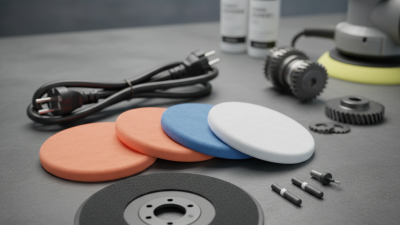
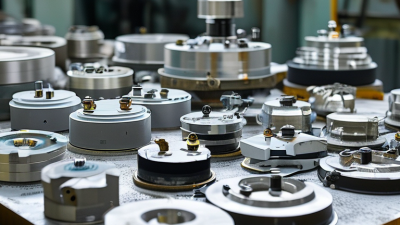
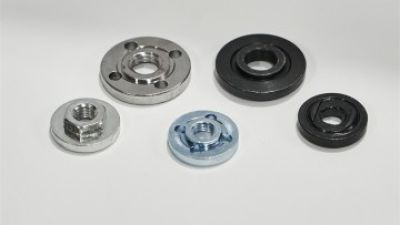
Choosing the best Grinder Flange Kit in China isn't just about comparing prices — there's more to it than that. A reliable kit should securely hold the wheel, stay balanced, and hold up through repeated heating and cooling cycles. Those little details really count, like thread precision and the contact face of the flange.
Li Wei, a seasoned abrasive-tool engineer based in China with over fifteen years of factory experience, puts it simply: "A good Grinder Flange Kit should basically disappear during operation — you should feel stability, not vibrations." His straightforward advice guides our approach. We focus on material consistency, machining tolerances, surface quality, the quality of washers, and whether it fits various grinder models. We also look at whether manufacturers can provide clear drawings, batch records, and helpful technical support.
The top Chinese suppliers usually make sure their production is tightly controlled, with hands-on inspections involved every step of the way. Their teams measure runout, verify thread engagement, and even test the assemblies under real working conditions. Honestly, a shiny product photo doesn’t tell you much — what really matters is factory discipline.
That said, no supplier's perfect. Some might excel in making quality-machined parts but slack off when it comes to packaging. Others may respond quickly but fall short on providing complete specs. That’s something you need to pay attention to. It’s always smart to ask for samples, double-check dimensions, and test the kit with your actual grinder and wheel before committing to a big order.
This guide is based on real-world experience, looking at how these manufacturers perform over the long haul. We consider performance, consistency, how well they communicate, and overall value. Remember, the best Grinder Flange Kit for you really depends on your specific needs. A workshop cutting through steel may prioritize different things than a contractor working with masonry. Ultimately, the right kit is one that fits perfectly, runs smoothly, and keeps doing its job day after day.
What Is a Grinder Flange Kit and What Does It Include?
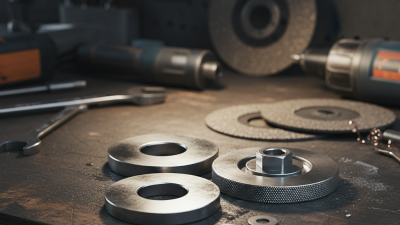
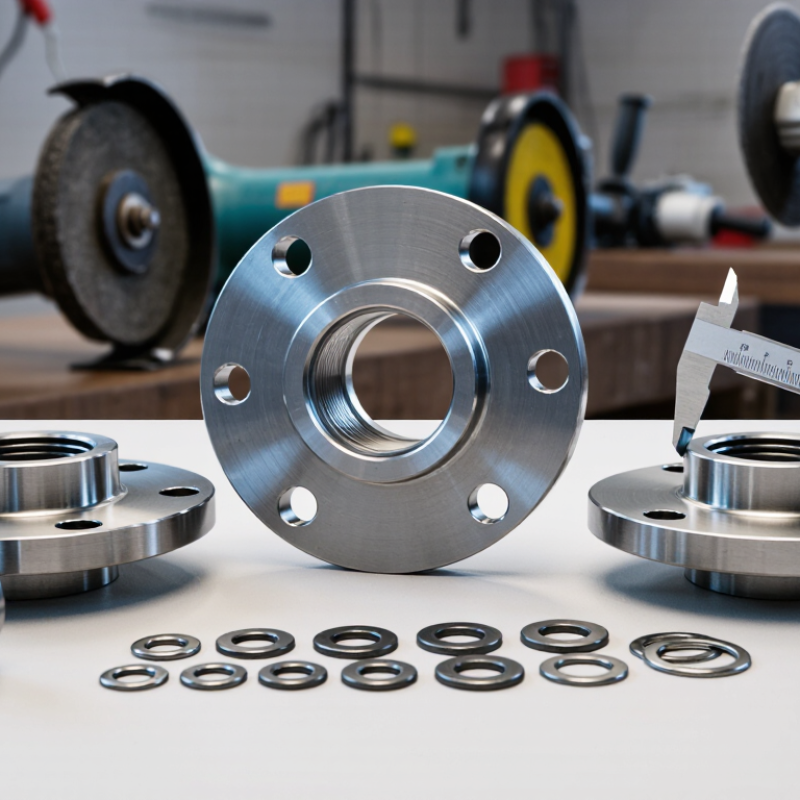
A grinder flange kit is the clamping system that secures an abrasive wheel to an angle grinder spindle. It normally includes an inner flange, an outer flange nut, and a two-pin tightening wrench. Some kits also contain stepped adapters, spacers, washers, or a storage case. Every part must match the grinder’s spindle thread, disc bore, thickness, and rated speed.
That detail matters. ISO 11148-8 covers safety requirements for hand-held power tools used for grinding and polishing. The standard emphasizes secure wheel retention and controlled operating conditions. A 2024 Grand View Research report valued the global power tools market at over USD 40 billion, showing the scale of equipment use, but market growth does not guarantee safe accessories. Fit remains the real test.
In practical inspection, I check flange flatness with a straightedge and measure the thread with a thread gauge. The mating surfaces should be clean, smooth, and free from burrs. The outer nut should tighten evenly without forcing the wheel sideways. Never rely on a loose universal adapter.
I still see buyers measure only the disc hole. That is not enough. A reliable kit should provide material specifications, dimensional drawings, torque guidance, and compatibility information. ISO 12100 risk-assessment principles also support clear instructions and foreseeable misuse checks. Some kits look precise but lack traceable inspection records. That weakness deserves attention before purchase.
How Are Grinder Flange Kits Manufactured in China?
China’s grinder flange kits are typically made through a controlled sequence of machining, finishing, and inspection. A reliable factory begins with certified steel or reinforced alloy, depending on the kit’s intended load and grinder compatibility. Material certificates matter because appearance alone proves very little.
Production often starts with CNC turning, stamping, or laser cutting. Machines form the flange profile, center opening, and threaded areas to precise measurements. Workers then remove sharp burrs and check flatness with gauges. Some parts receive heat treatment or surface protection to improve durability and reduce corrosion.
Small dimensional errors can cause vibration.
Quality teams test sample batches before packing. They measure runout, thread accuracy, balance, and fit against approved grinder models. A useful Grinder Conversion Kit should include clear installation instructions and traceable batch records. I have found that careful inspection is more valuable than polished packaging. Still, no factory is flawless. Tool wear, rushed adjustments, or mixed materials can create inconsistent results. Factories should record nonconforming parts instead of quietly reworking everything. That record supports better decisions.
Experienced suppliers also review production data after customer feedback. They may adjust cutting speeds, inspection frequency, or protective coatings. Buyers should request drawings, material details, tolerance information, and test procedures.
Compatibility must be confirmed before use. A lower price can hide weaker controls, although high pricing does not guarantee perfection. Reliable manufacturing depends on repeatable processes, honest reporting, and practical verification.
Which Chinese Manufacturers Produce Grinder Flange Kits?
Chinese manufacturers of grinder flange kits usually fall into three groups. Precision hardware factories in Guangdong and Zhejiang machine steel flanges for common angle grinders. Abrasive accessory specialists produce matched nuts, backing plates, and retaining rings. Larger OEM factories combine machining, stamping, heat treatment, and packaging under one production system.
An experienced buyer should inspect more than a low quotation. Ask for flange drawings, thread specifications, material certificates, and runout test records. A reliable factory can explain whether it uses carbon steel, stainless steel, or hardened alloy steel. It should also confirm M14 and 5/8-11 compatibility when required. Sample testing matters. Place a flange on a clean spindle, tighten it evenly, and check for wobble during a controlled bench inspection. Small gaps become obvious there.
Some Chinese factories also assemble an Angle Grinder Accessory Kit with washers, locking nuts, adapters, and storage boxes. These suppliers are useful for distributors needing one package instead of separate components. However, quality can vary between batches. I have seen polished surfaces hide uneven machining. That mistake is easy to miss in photographs. Request several samples from different production lots, not one perfect piece. A factory with clear inspection records, traceable materials, and responsive technical staff is usually a safer choice than a trading office with vague specifications. My own screening would still include a second measurement, because even good suppliers can overlook thread damage or inconsistent plating.
What Standards Define a High-Quality Grinder Flange Kit?
A high-quality Flange Nut Kit begins with precise fit, not attractive packaging. The flange must match the grinder spindle and the abrasive wheel opening without forced adjustment. Thread dimensions should follow recognized metric or imperial specifications, while manufacturing tolerances need clear documentation. Small errors matter. A loose flange can create vibration, uneven wear, and unsafe wheel movement.
Material selection also defines reliability. Hardened steel usually resists thread damage and repeated tightening better than soft, untreated metal. Corrosion-resistant finishing helps when the kit is stored in a humid workshop. Quality checks should include thread gauges, flange flatness, hardness testing, and torque verification. ISO 9001-based process control can support consistency, but certification alone does not prove every component is excellent. Actual inspection records matter more.
Fit it carefully. During practical checks, the flange should seat evenly, turn smoothly, and hold the wheel without distortion. The nut should accept the correct tool and maintain clamping force during operation. A responsible manufacturer should provide material details, dimensional drawings, compatibility guidance, and batch traceability. No inspection system is perfect. I have seen apparently clean kits with rough threads and slightly warped faces. That is why sampling, field feedback, and periodic testing remain essential. A reliable kit feels simple in use, but its quality comes from disciplined details.
Who Makes the Best Grinder Flange Kit in China?
A high-quality grinder flange kit is defined by measurable requirements rather than brand name. The chart highlights the main standards and quality controls used when evaluating flange compatibility, mechanical safety, dimensional accuracy, material traceability, and production consistency.
How Do Chinese Grinder Flange Kits Compare in Performance and Price?
Who Makes the Best Grinder Flange Kit in China?
Chinese grinder flange kits often compete through lower pricing, faster customization, and broad material choices. Grand View Research valued the global abrasives market at about USD 46.7 billion in 2022. Its report also projects a 4.8% annual growth rate through 2030. This demand encourages Chinese manufacturers to improve machining accuracy and export quality. In practical purchasing, Chinese kits commonly cost 15% to 30% less than comparable imported assemblies. The saving is real. It is not always enough.
Performance depends on details that photographs cannot show. I check flange parallelism, bore tolerance, thread quality, and radial runout before judging a supplier. A small seating error can create vibration, uneven wheel wear, and extra heat. ISO 16089 emphasizes safe design and controlled mounting for stationary grinding machines. Chinese suppliers with documented inspection records usually perform more consistently. Still, quality varies between factories using similar drawings. That part deserves more skepticism.
A reliable comparison should include steel hardness, surface finish, balance testing, packaging, and replacement response. Low-cost kits may use acceptable steel but weaker heat treatment. That weakness appears after repeated tightening. Requesting inspection samples is wiser than trusting catalog claims. I would also compare total cost, including rejects, freight, and downtime. Price wins only when the flange stays stable under real shop conditions.
How Can Buyers Select the Best Chinese Grinder Flange Kit Supplier?
Choosing the best Chinese Flange Plate Kit supplier requires more than comparing prices. China produced about 1.019 billion tonnes of crude steel in 2023, according to World Steel Association data. That scale supports strong material access, but it does not guarantee consistent machining or safe performance.
Ask for material certificates, hardness records, and measured runout results for each batch. A reliable supplier should confirm spindle dimensions, flange thickness, hole position, and balancing requirements before production. Request a sample kit and inspect its seating surface under bright light. Even a small burr can create vibration during grinding. Suppliers with CNC records, calibrated measuring tools, and traceable inspection reports deserve closer attention. ISO 9001 certification helps, but the certificate alone proves little without recent audit evidence.
Delivery control also matters. The World Bank’s 2023 Logistics Performance Index gave China a score of 3.7, ranking it 19th globally. This suggests capable logistics, yet port delays and packaging weaknesses still occur. Ask how the supplier protects machined faces, labels cartons, and handles replacement parts. I would not trust polished product photos as evidence. This is where buyers can judge too quickly. A factory visit, video inspection, or independent dimensional test may reveal uncomfortable details. The lowest quote can hide thinner steel, inconsistent coating, or weak final inspection. Some suppliers explain these risks clearly; others avoid them. That difference is often more valuable than a small price reduction.
M10 & M14 Angle Grinder Pressure Plate Flanges: Fit, Features, and Factory Buying Guide
Choosing the correct pressure plate flange is essential for safe, stable angle grinder operation. M10 and M14 configurations are the most common options, with M10 generally suited to compact 100 mm and 125 mm grinders, while M14 is widely used on larger models. Before purchasing, confirm the spindle thread, disc diameter, mounting hole, and available clearance to ensure a precise fit.
A complete set normally includes an inner pressure plate, or support flange, and an external pressure plate, commonly called a locking nut. The inner flange positions the grinding disc and supports its center, while stepped or conical surfaces help improve alignment and reduce movement during use. The locking nut screws onto the spindle thread and applies even pressure to the outer side of the disc. Durable steel construction, accurate machining, and smooth thread engagement are important features for reliable performance.
When sourcing from a factory in China, buyers should check thread accuracy, flange dimensions, surface finish, heat treatment, and compatibility with different disc types. Stable production processes and consistent inspection help ensure that every component fits correctly and withstands repeated tightening and vibration. Custom packaging, bulk supply, and support for standard M10 or M14 specifications can also make procurement more efficient for tool manufacturers, distributors, and maintenance suppliers.
FAQS
Manufacturers usually use certified steel or reinforced alloy. Material choice depends on load, grinder compatibility, and expected service conditions. Looks can mislead. Request material certificates before approval.
Production may include CNC turning, stamping, or laser cutting. These processes form the flange profile, center opening, and threaded sections. Workers remove sharp burrs afterward. Small machining errors can cause vibration.
A flat flange supports stable seating against the grinder. Inspectors use gauges to check the surface. An uneven area may create wobbling or uneven grinding. That small defect matters.
Ask for runout, thread accuracy, balance, and fit test results. The supplier should test samples from each production batch. Request measured values, not general promises. I would not rely on photographs alone.
Confirm spindle dimensions, flange thickness, hole position, and thread details. The supplier should review these measurements before production. A sample kit can expose poor seating. Compatibility must be verified before use.
Request drawings, material certificates, tolerance data, and inspection procedures. Batch records should connect test results with specific production lots. Recent audit evidence is more useful than a certificate alone. Paperwork is not perfection.
Examine the seating surface under bright light. Check for burrs, scratches, uneven edges, and damaged threads. Use suitable measuring tools to confirm critical dimensions. An independent test may reveal uncomfortable details.
Not always. A low quote may reflect thinner material, weaker coating, or limited inspection. High pricing also fails to guarantee perfect performance. Compare process controls, test records, packaging, and replacement support.
Conclusion
A Grinder Flange Kit is a set of precision components used to secure and stabilize grinding wheels, discs, or related accessories on compatible power tools. A complete kit may include inner and outer flanges, locking nuts, spacers, adapters, and installation instructions. In China, these kits are commonly manufactured through metal forming, CNC machining, heat treatment, surface finishing, and quality inspection. Reliable production requires accurate dimensions, consistent materials, balanced design, and careful control of tolerances.
Several Chinese manufacturers produce grinder flange kits for different tools, wheel sizes, and working conditions. A high-quality Grinder Flange Kit should meet applicable safety, material, dimensional, and performance requirements while offering secure clamping and resistance to wear and deformation. Chinese products can provide a practical balance between performance and price, but quality may vary between suppliers. Buyers should compare manufacturing capability, testing procedures, customization support, delivery reliability, documentation, and after-sales service before selecting the best supplier.