Leave Your Message
-
Phone
-
E-mail
-
Whatsapp
Explore our high-demand rotary wire accessories, chimney cavity scourers, and precision conversion joints tailored for angle grinder surface preparation.
From micro-corrosion pitting to mill-scale delamination: How rotary wire kinetic impact revolutionizes modern industrial refurbishments.
In modern manufacturing, offshore petrochemical operations, and bridge rehabilitation, corrosion remains one of the largest threats to structural integrity and asset longevity. The application of an angle grinder wire brush for rust removal bridges the gap between manual wire brushing (laborious and inconsistent) and abrasive sandblasting (which demands massive environmental containment, dust collection, and costly downtime). By utilizing rotary peripheral speeds ranging between 8,500 and 12,500 RPM, wire brush filaments apply continuous high-frequency peening against oxidized substrates, fracturing ferric oxides (Fe2O3 and Fe3O4) without excessively biting into the virgin base steel.
Unlike grinding discs that remove substantial parent metal and induce undesirable notch stresses or altered metallurgical tempers, wire brushes act primarily on surface contaminants. Whether cleaning weld root passes, stripping marine barnacles and marine splash-zone pitting, or preparing structural beams for zinc-rich epoxy primers, selecting the appropriate wire geometry—such as twist knot, crimped brass-coated steel, or stainless steel filaments—determines productivity, worker safety, and the final surface anchor profile (SSPC-SP 2/SP 3 standards).
Braided carbon wire filaments concentrate mechanical energy, delivering heavy aggressive scouring power capable of shearing thick flake rust and dense thermal slag.
Individually crimped wires provide maximum flexibility, preventing gouging while following undulating contours, curved pipe walls, and recessed weld joints.
Essential for stainless vessel and nuclear pipe rust maintenance, austenitic wire filaments eliminate free carbon cross-contamination and downstream galvanic pitting.
Analyzing critical sectors where angle grinder wire brush setups ensure rapid substrate decontamination and maximum coating adhesion.
The demand for high-performance wire brushing systems has evolved beyond simple handyman repairs into strict industrial quality control workflows. In pipeline maintenance, for example, internal and external circumferential welds accumulate interpass slag and atmospheric flash rust. Utilizing bevel wire wheels and twisted knot brushes attached via precision concentric flange nuts ensures the weld crown is scoured clean before non-destructive ultrasonic testing (NDT) and field joint heat-shrink sleeve application.
| Application Scenario | Recommended Wire Type | Ideal Grinder Spec & RPM | Primary Technical Objective | Critical Accessory Requirement |
|---|---|---|---|---|
| Shipyard Hull & Ballast Tanks | 0.50mm Oil-Tempered Knot Twist Cup | 180mm / 230mm (6,500 - 8,500 RPM) | Rapid heavy mill-scale & saltwater blister removal | Thickened 45# High-Tensile Flange Plate |
| Cross-Country Pipeline Rehabilitation | High-Density Bevel Wire Wheel | 125mm (10,000 - 11,000 RPM) | Cleaning bevel root gaps & pipe interior cavities | M14/M10 Hex Extension Shafts & Adapters |
| Structural Steel & Beam Refurbishing | Encapsulated Polyurethane / Crimped Steel | 115mm / 125mm (11,000 RPM) | Creating uniform anchor pattern without wire shedding | Self-Locking Anti-Loosen Outer Nut |
| Automotive Chassis & Restorations | 0.30mm Brass-Coated Crimped Wire Cup | 100mm / 115mm (8,500 RPM) | Stripping undercoating without rupturing thin sheetmetal | High Concentricity M10 Pressure Flange |
| Internal Pipe & Chimney Descaling | Flexible Tube & Pipeline Scrubbing Brushes | Drill/Grinder Adapter Driven (Low/Mid RPM) | Borehole oxidation scouring & soot removal | M12 French Thread Rod Connectors |
Emerging Industry Trends: Three major technological shifts are steering the surface preparation sector: First, the proliferation of cordless, high-torque brushless angle grinders requires lower-inertia wire brushes to preserve lithium battery discharge cycles while maintaining peak cutting torque. Second, stricter ergonomics and dust suppression directives in the EU and North America require brush-specific suction cowls; these hoods encapsulate the rotating brush to extract carcinogenic rust particulates and sheared wire bits. Third, precision automated manufacturing: CNC-balanced brush backings paired with ultra-tight tolerance drive nuts mitigate harmonic resonance, preventing premature operator numbness (Hand-Arm Vibration Syndrome - HAVS) and safeguarding grinder spindle bearings from catastrophic failure.
A wire brush operates under severe torsional resistance and dynamic radial shocks. Substandard mounting hardware causes chatter, wire fly-off, and spindle damage.
When an angle grinder spins a heavy 3-inch or 4-inch knotted wire cup brush at 11,000 RPM, centripetal force constantly attempts to displace the filaments. Any minor concentricity deviation (>0.08mm) in the arbor mounting nut translates into intense dynamic runout. This vibration not only fatigues the operator within minutes but also causes asymmetric wire fracture, throwing dangerous metal bristles into the work perimeter.
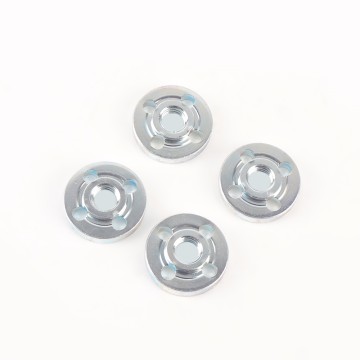
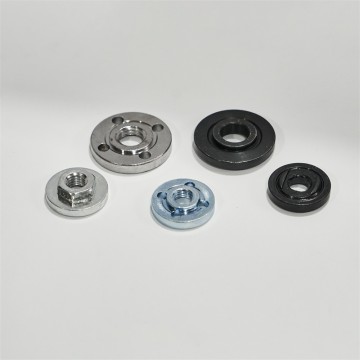
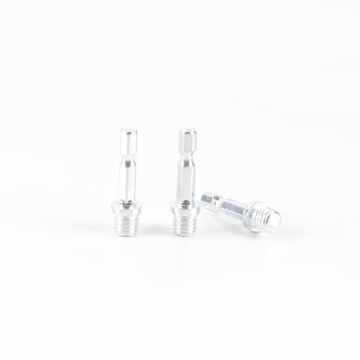
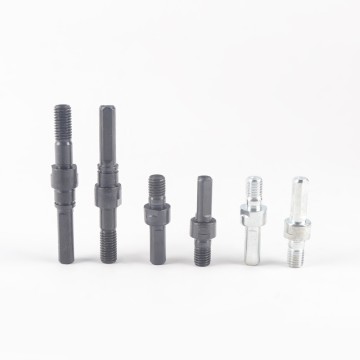
Yuyao Guling Hardware Co., Ltd. resolves these severe operational challenges by engineering precision pressure plates, conversion joints, and flange nuts forged from 45# carbon steel and quenched to HRC 35-45. By enforcing CNC-machined thread tolerances within ±0.05mm, Guling pressure plates ensure the wire brush maintains perfect axial parallelism. Whether adapting small M10 angle grinders to handle M14 wire attachments or securing heavy grinding discs, our drive components provide the structural backbone required for safe, high-speed rust stripping.


Welcome To Learn About Our Company
Combining high-volume cold heading automation with precision CNC secondary machining to deliver world-class tool accessories.

Produce according to customer drawings/samples, thread M10, M14, 5/8-11, etc.

CNC machining, dimensional tolerance ± 0.05mm, high concentricity.

Three tests including pressure testing, dynamic balancing, and salt spray rust prevention.

Some factories have patented designs for anti lock, self-locking, and anti-skid.
End-to-end quality assurance ensuring every pressure plate supports wire brushes and cutting discs with zero wobble.
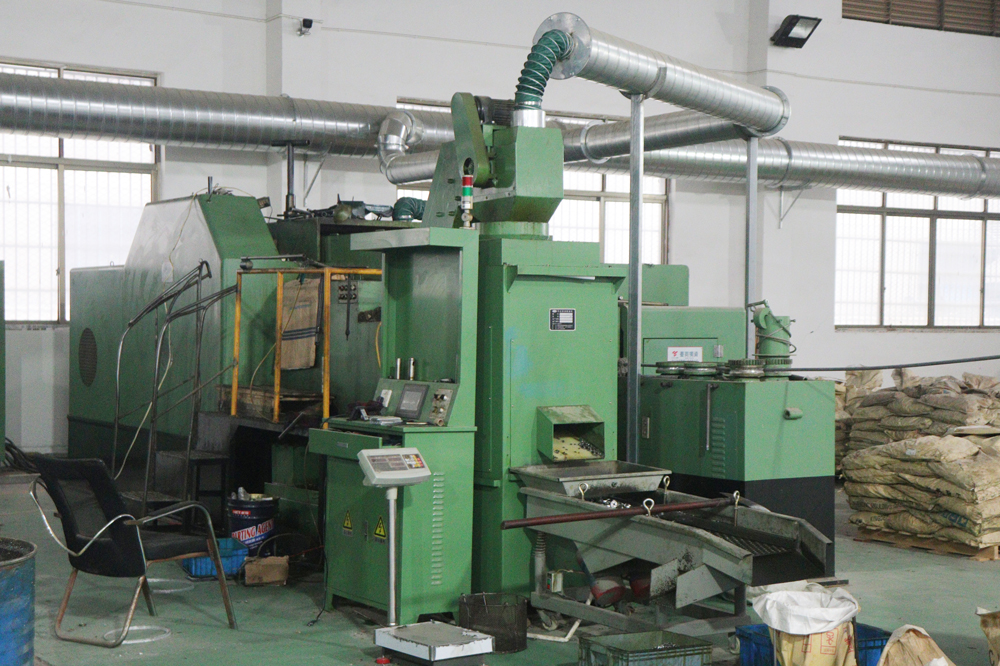
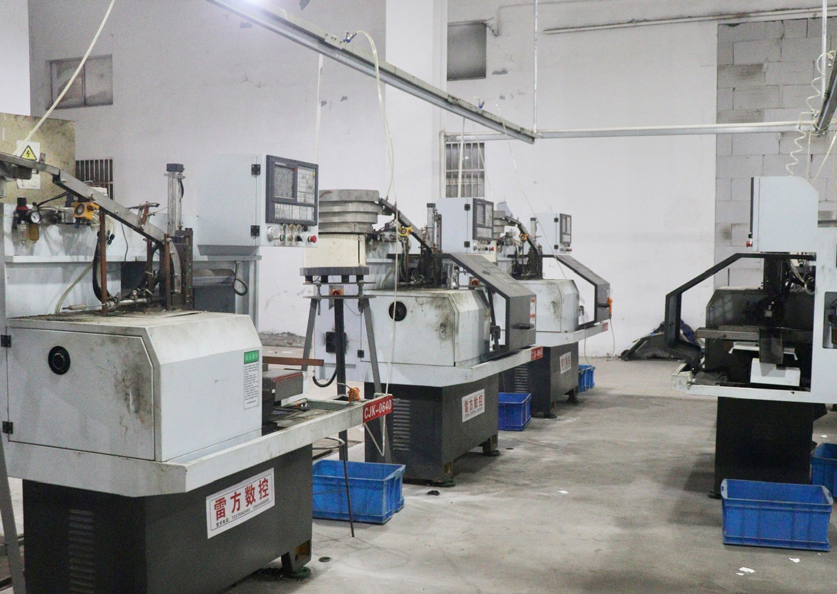
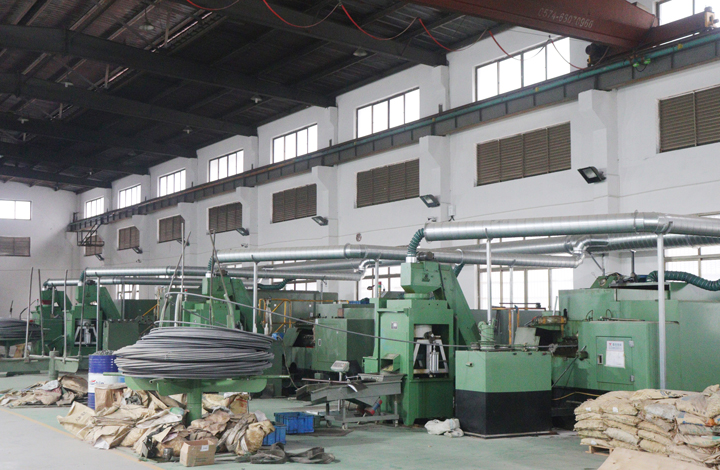
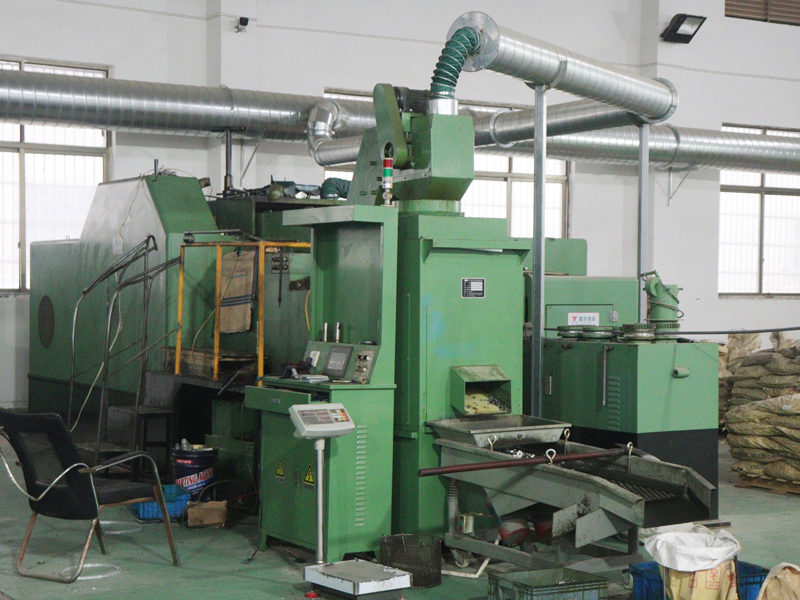
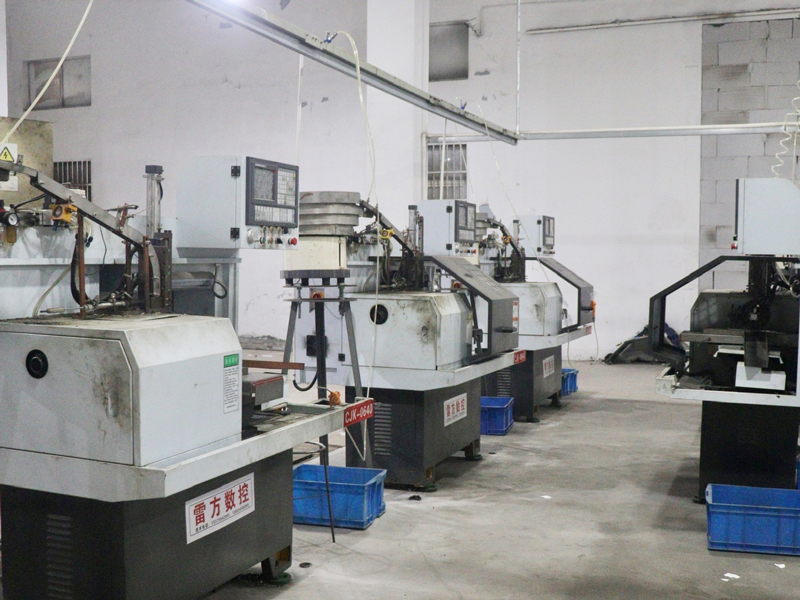
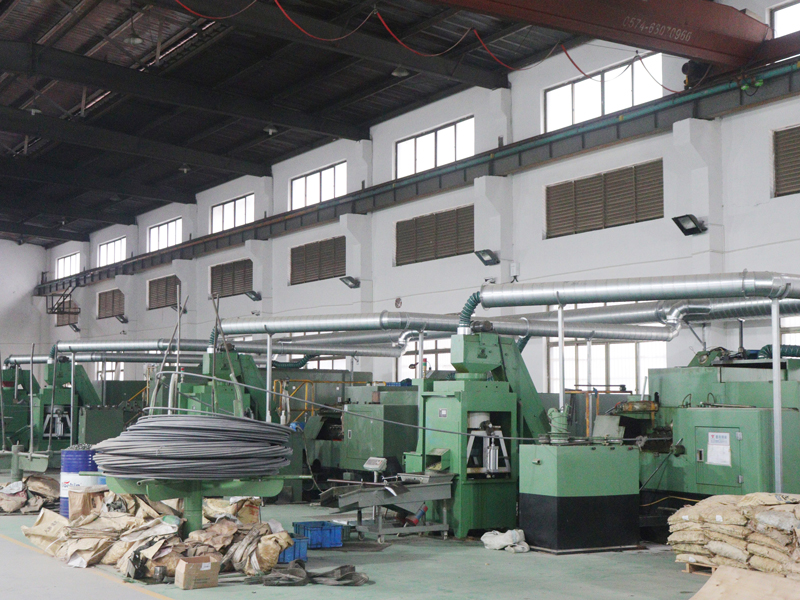
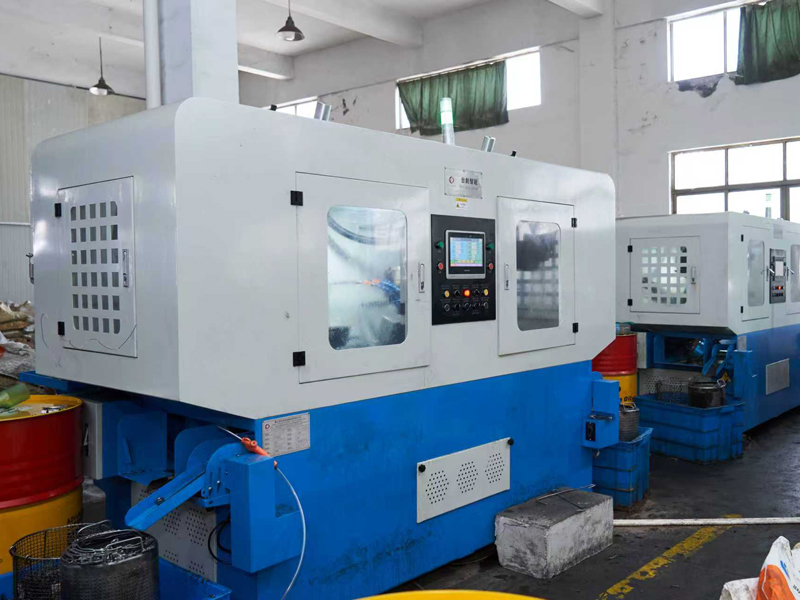
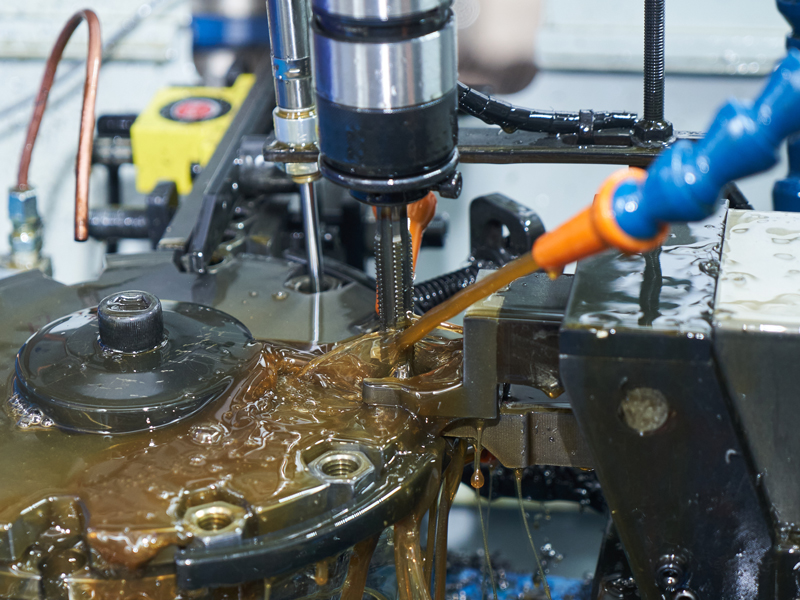
A glimpse into our workshop equipped with 40 automated CNC machines, cold heading units, and rigorous metrology tools.
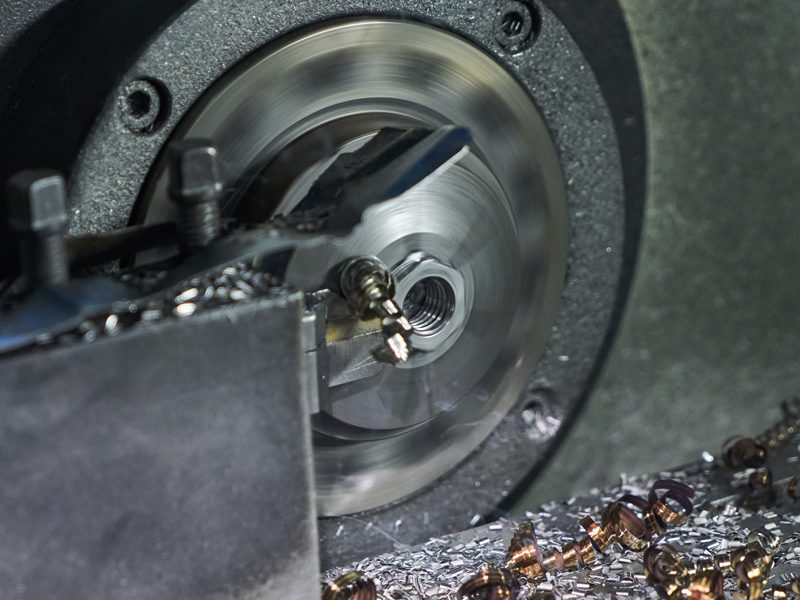
Expert answers regarding wire selection, speed governance, safety standards, and flange compatibility.
A: Knotted wire brushes feature twisted wire bundles that act like concentrated impact chisels. They are engineered for aggressive rust removal, thick mill-scale, and slag peeling. Crimped wire brushes feature separated, undulating wires that flex over uneven surfaces, making them optimal for light to medium surface rust, deburring, and uniform blending without removing underlying metal.
A: No. Using carbon steel wire on stainless steel or aluminum embeds microscopic carbon steel particles into the softer substrate. When exposed to ambient moisture, these embedded particles initiate galvanic corrosion, causing severe after-rust. Always select dedicated 302/304/316 stainless steel wire brushes for stainless components and non-ferrous alloys.
A: Excessive vibration is usually caused by either unequal wire shedding, poor dynamic balance of the cup shell, or an eccentric mounting pressure plate. Ensure your angle grinder uses a high-precision CNC-machined flange plate with a concentricity tolerance within ±0.05mm. Never exceed the Max RPM rating stamped onto the brush body.
A: Global standards depend on the tool size and region. Common grinder threads include M10 × 1.5 (standard on 100mm/4" grinders in Asia/Europe), M14 × 2.0 (standard on 115mm/125mm/180mm/230mm grinders across Europe and international markets), and 5/8"-11 UNC (predominant in North America). Guling manufactures precision adapters and conversion rods allowing seamless interchangeability.
Looking towards the future, Yuyao Guling Hardware Co., Ltd. will continue to focus on engineering innovation and manufacturing discipline, deepen the application boundaries of metal forming technology, and provide more stable, reliable, and long-term value manufacturing support for global industrial customers. Choosing products from Guling is a wise decision for you. We welcome users to visit and inquire about our products to gain a deeper understanding, benefit each other, and create brilliance together. Guling Hardware, looking forward to cooperation!
Review our comprehensive lineup of heavy-duty metal finishing accessories, precision arbor conversion rods, and anti-slip pressure plates.